Meeting Shola and Growing Up Nigerian
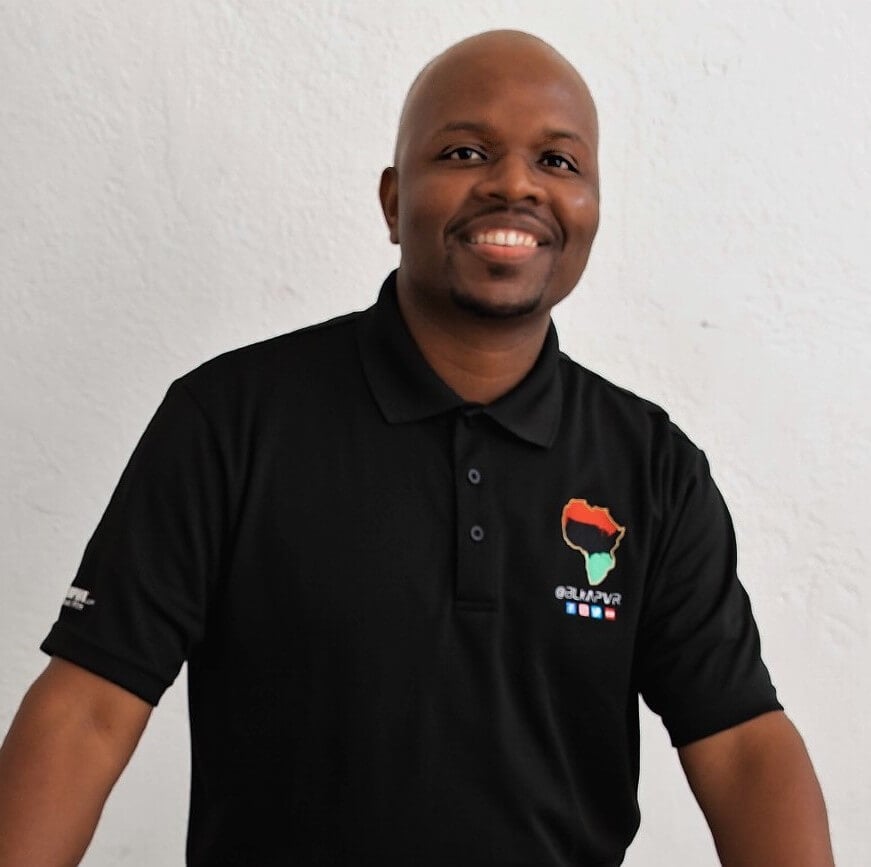
Taryell Simmons: Welcome, ladies and gentlemen, to another episode of the Rise Urban Nation podcast. Thank you to my girl Shola for introducing Ighosime to the podcast. Today we're diving into finance, investment and banking, with a special focus on emerging markets, and a little football. Not American football, the real football. My brother is currently serving as AVP at Moody's for EMEA financial institutions. Did I say that right?
Ighosime Oyofo: That's correct. The one you actually play with your feet. I'm just old, I've been here long enough.
Taryell Simmons: We were vibing before we even hit record. So how did you meet Shola?
Ighosime Oyofo: Through our parents. I've known Shola since I was about seven, way before she left Nigeria. Your folks hang out, they've got kids, and the kids go play. Then we lost touch, and through the magic of Facebook we got back in touch. To date myself, I was probably one of the first million or so people on Facebook. It started at Harvard in 2004, I think, and at first you needed a US university to get on. It worked its way down the Eastern Seaboard, and George Washington, where I went, got it early. Shola is a dynamo. I told her the other day, I can't keep up with you. It's like the Tasmanian devil and the Road Runner at the same time. When people in the venture and startup space say every day is different, I used to think they were glamorizing it. When you meet someone who really does it, you see it's real.
Taryell Simmons: I attest to that. When this podcast morphed into social innovation and DEI all in one breath, my mind was local, connecting the dots in our region. She took me to a global mindset, and I was like, oh snap, this is bigger than I thought. Now, we all know Nigerian names have a meaning, a calling. What's the meaning of yours?
Ighosime Oyofo: You're getting deep right out the gate. My first name, Ighosime, means I look upwards to God. Nigerian names always mean something, and most of the time it has to do with God. It's a powerful name, and I try to take strength from it on the daily.
Taryell Simmons: That explains why the light is shining from your head. You're looking like Jesus.
Ighosime Oyofo: Y'all tell everybody I'm out here being bald Jesus. Last we checked, Jesus had hair. Forgive me, we're just vibing.
From DC to Investment Banking in Nigeria
Taryell Simmons: You went to George Washington. I grew up in Northwest DC, so you weren't far from me. Tell me about your journey to London and your role at Moody's.
Ighosime Oyofo: George Washington, not Georgetown. My time in the States was all DC. Before moving back to Nigeria, I had a short stint at a nonprofit called Kid Power DC. Shout out to Max, who I've not seen in nearly two decades. As an international student, if you don't get an H-1B visa it's very difficult to stay and work. Coming out of university I got Optional Practical Training, which lets you work for a year, and then you need a company to sponsor your visa. At Kid Power I spent four or five months working with kids from the tougher parts of DC, the Northeast and the Southeast, running after-school programs to keep them off the street. It was very rewarding.
Ighosime Oyofo: Then I was a research analyst for about six months at Institutional Shareholder Services. Public companies put proposals to shareholders, and I would take a 300-page proxy circular and summarize the key points, so investors could outsource their voting to us. But I was always meant to go back to Nigeria. I started in investment banking in January 2007.
Taryell Simmons: He's like, I began when I had hair.
Ighosime Oyofo: For real, I was clutching on to the last vestiges of my hairline. People ask why I didn't do investment banking in the States. I read a book called Monkey Business about bankers in New York and thought, this isn't for me. What banking in Nigeria offers that New York or London doesn't is that you don't specialize straight out the gate. One client wants to raise equity, another wants debt, somebody's doing a merger or a strategic takeover, and you're working on all of them at once. A lot of innovation also comes from the bankers. You look at Sarbanes-Oxley and at board structures. In the States a chairman can be the CEO, but in Nigeria that's not possible. So you ask what to take from the West, bring to African emerging markets and tailor so it's fit for purpose, while moving towards best practice.
Holding On to Heritage
Taryell Simmons: We have parallels. I worked in DC, a mentor got me to the West Coast, and in San Diego I created a program for inner-city youth, which led me to this podcast. I feel some of our Black youth can't be what they can't see. They've been so far removed from their history and heritage that they can't connect to it. You and I had it centered in our households. What's your take?
Ighosime Oyofo: I agree wholeheartedly. I began in the Nigerian and British curriculum, but my dad, who started his career in oil and gas and was always out in Texas, in Dallas and Houston, saw the benefits of the American system, the way kids are encouraged to think through problems. So at about 10 going on 11 I started at an American school in Nigeria, the first in my family to do so. Then you compare it with how you grew up, and you see deficits. One glaring example is that our culture doesn't encourage you to question your elders. Even at my age, question someone 20 years older and they'll say, who are you talking to? You sent me to an American school to expand my mind, and when I apply it at home, I get yelled at.
Taryell Simmons: Or get smacked down.
Ighosime Oyofo: But with hindsight and maturity, you realize you can hold on to your Nigerian and African heritage and values. One doesn't have to exist in place of the other. Some people move away from that part of their life because it represented a tough time, as a defense mechanism, and that's fair. I just think it's a shame, because the two can coexist. A lot of how I approach things is quote-unquote westernized, but there's a foundation of strong Nigerian values underneath, and I'll also be the first to call out what I think is wrong. My mom thinks I'm a fantastic son, and I also infuriate the heck out of her. Is that how you talk to your mother? Mom, you asked me a question, I'm giving you the realities.
Taryell Simmons: I resonate with that. My son, the director, the chief.
Ighosime Oyofo: They hail your accomplishments, then at home it's, you think because you have a title you can talk to me? I am your mother, there's no title bigger than that. So you learn to keep quiet out of respect, because not everything is a fight. And it's not really their fault. How are they supposed to unpack decades of how they were raised because you came home with a fancy education?
Taryell Simmons: It's a delicate balance. If I unravel everything they know at once, they'll reject everything coming out of my mouth. So I drop little nuggets, and a few months later they come back like, did you know this? Because they did their own research.
Ighosime Oyofo: Exactly. One that's been interesting with my folks is Meghan and Harry. We could do a whole episode on that, from a colonial history perspective and a family perspective. You don't give them the whole dish, the eba and okra with crab and meat. You give them a morsel, a profiterole, and leave a little crumb so they start to understand. But the vibes is too much, man.
Why African Banks Matter
Taryell Simmons: What motivated you to focus specifically on financial institutions in Africa, and what unique challenges do you see? The African market fascinates me. Yesterday I was with my financial advisor diversifying my portfolio, thinking, I don't know how anyone navigates investing in the African market.
Ighosime Oyofo: For the audience, I began in investment banking and financial advisory, working with SMEs, small and medium enterprises, as an independent advisor, and then with large corporates as an investment banker proper. What I'm doing currently is credit ratings, focused on African banks. There's so much focus on banks because they're the gateway into the economy. You might think it's a manufacturer or a shoe producer, but the banks understand the market, and the people you want to invest in are the banks' clients, through their deposits and loans. Fundamentally, the bank is there to serve the economy. Banks take deposits and either lend them or invest them.
Ighosime Oyofo: There's a ratio called the loan to deposit ratio. In a market like Angola it might be 20 to 30 percent, so for every dollar of deposits they lend 20 or 30 cents. In Nigeria it's closer to 60 percent. Apart from regulation, what drives that is the size of the opportunities and the diversity of the economy. Nigeria has 200-plus million people and businesses in manufacturing, healthcare, pharmaceuticals, housing, everything. Angola is smaller and more monoline, around oil and gas, so lending becomes a risk question about the customers available.
Ighosime Oyofo: In general you want to lend to companies with a history, financials you can check and an office you can visit, rather than to individuals, and that gets into collateral. That shows there's an opportunity for different grades of banking, which more mature economies already have. The unsecured lending market in the UK is huge, with personal loans up to 25,000 pounds. In an African context that's a lot of money in any currency, and you have to ask whether customers will pay it back. In the West you've got credit history, credit scoring, social security and ID, so if you don't pay your debts it follows you. In Africa a lot of that is not yet developed. Because banks are the conduit to the economy, they have to be the focus.
Taryell Simmons: Ever since George Floyd, I've been brainstorming with fellow Nigerians and Black Americans about how Africans and Black people across the diaspora can put our money together and invest in each other. Maybe through African banks with a location here in the US.
Ighosime Oyofo: I'm with you. There's UBA, United Bank for Africa, originally a Nigerian bank, in 20-something African countries and one of the largest in Nigeria. They actually have a New York branch. But most of these banks with UK or US branches are set up for corporates, so a large Nigerian client with business in the States or the UK can bank seamlessly there. For individuals taking their deposits to these banks, it's still got a ways to go. More Nigerian banks have a UK presence than a US one, where only a handful do. Over time we'll see more of that.
A Single Currency, Remittances and Foreign Exchange
Taryell Simmons: Humor me on a wild dream. Would the continent benefit from one currency, and what would it take?
Ighosime Oyofo: You ask some tough questions. It's a nice idea. How practical it is, is hard to say. Africa top to toe is about 1.4 billion people, from Egypt, Algeria, Morocco and Tunisia down to South Africa, Namibia, Angola and Zimbabwe, with so many cultures, economies and trade flows. During an internship at the World Bank, between my junior and senior years, I first saw the term MENA, the Middle East and North Africa, and learned of sub-Saharan Africa as a region. The implication is that North Africa has more in common with the Saudis, the UAE and Qatar than with sub-Saharan Africa, which is about 1.1 to 1.2 billion people. That alone makes a single currency exceedingly difficult.
Ighosime Oyofo: The other question is what these countries produce and where their foreign exchange comes from. Many European countries produce lots of things, not just one or two. We do have the African Continental Free Trade Area, meant to help lead to something like the EU. Most African countries have signed on. I think signing and ratifying are different, and I'm not 100 percent sure how that works. But implementation hasn't really happened yet. There's a secretariat I think is based in Ghana, and plans for moving goods and services across borders, but it will take time. That would be the first step to a continental currency. Honestly, if Africa can just implement a free trade area, that will solve so many issues that we probably wouldn't need a common currency.
Taryell Simmons: Thinking about Africans across the diaspora, what comes to mind is brand building and visibility for sub-Saharan Africa, with education to get people on board. I feel there need to be more of those initiatives.
Ighosime Oyofo: There are definitely some, but you're right. One of the first ways in is diaspora remittances. Your aunties, uncles and cousins are in Nigeria, and you have to send money home. People used Western Union and MoneyGram. Now there are more efficient ways through fintech and digital banking.
Taryell Simmons: Which is still not clean. I pay my virtual assistant in Nigeria, and the hoops to get the money there without losing half of it.
Ighosime Oyofo: That's why these fintechs are coming up, to fill those gaps. Exchange rates aside, getting dollars over, finding someone to change them and putting the money in someone's account is tough. Regulation is trying to streamline that, but it takes time. In Nigeria, the previous administration wasn't very welcoming of things like the fintechs that do crypto, so innovation got stifled a little, but it kept happening anyway. Do you open a sandbox and let everyone innovate, or try to stifle it, knowing they'll find other ways?
Ighosime Oyofo: Nigeria's currency situation ties back to the common currency question. The economy is fairly diversified. In a given year oil and gas is about 10 percent of GDP and agriculture 20 to 23 percent, plus services. But roughly 90 percent of what we earn in US dollars comes from oil and gas. To change that, you export more. Pick up an orange or a pineapple at Whole Foods and the tag says Ghana or Sierra Leone, rarely Nigeria, because we don't export or produce enough. So there are lots of imports, and when you spend your foreign exchange on imports and servicing debt, you never get the currency stability to even start talking about a unified currency.
Taryell Simmons: And the infrastructure needs to be there for that production and export. That's why we see China building infrastructure in places like Nigeria. But what's the debt on that? That's a whole other rabbit hole.
Ighosime Oyofo: That's another episode. You've got five episodes lined up. Here we are again, folks, our usual monthly session with Ighosime, talking Africa, trade and business.
Business Lessons from Arsenal and the Premier League
Taryell Simmons: Let's shift gears. You recently wrote about business lessons from Arsenal. How are sports and business cycles similar?
Ighosime Oyofo: Happy to. And yes, I'm an Arsenal fan, that ain't changing. I've been through the tough times, and now we're getting back to the good times. It all comes down to resources. In my pieces I talk about the Premier League era. Before that it was the English First Division, and Liverpool was the team. These clubs are old. Arsenal is about 126, 127 years old. Coming into the Premier League, Liverpool had 18 titles, Arsenal 10 and Manchester United seven. Then things changed. Massive sponsorships, it was the Barclays Premier League, and TV money, because the games are exciting and fast-paced. It's become bigger in the States in the last five years, but historically nobody here cared. In the UK, football culture is huge, so you bottle the excitement, the drama and the crowds, and you sell it. As the TV money is shared between clubs, it comes down to how you invest it and which manager leads you.
Ighosime Oyofo: Manchester United had a relatively young coach, Sir Alex Ferguson, who didn't have the best start. The Premier League started in 92, 93, and by 2000 United had added a few titles and Arsenal one or two. Chelsea was a distant fourth and Manchester City was in another division. Dominance went back and forth between United and Arsenal, with a sprinkling of a Blackburn. Clubs get relegated, which doesn't happen in American sports. The clubs that stay at the top earn from match day, advertising, jerseys, marketing and TV. You reinvest, get the right coaches, keep winning, and over time the resources stack up. That's what drives dominance.
Ighosime Oyofo: Look at Apple: Jobs in the garage, competitors innovating around them, Jobs leaving and coming back to take it to the next level while the HPs and Dells change. Look at apparel. Before Nike you had Adidas, and then a clear period of Nike and Adidas. And who owns Converse now?
Taryell Simmons: Converse was the bigger name before that. And Nike was a nobody when Michael Jordan signed with them.
Ighosime Oyofo: Exactly, I just watched the film. Converse is now owned by Nike. Then where did Under Armour come from? Kevin Plank started it in the late nineties, I think, with American football gear. New Balance has been around a while. I had gray, white and blue 574s at university. Then they disappear, and suddenly they're having a big resurgence.
Taryell Simmons: We all wore New Balance in DC. Those shoes were comfortable.
Ighosime Oyofo: You see it in technology, footwear, the NBA. Because these teams are run as businesses, you see the same periods of dominance, helped by technology or capital. Around 2003, Roman Abramovich, a rich guy from Russia, buys Chelsea and says, which players do you need? I got you. Chelsea become one of the most dominant clubs of the Premier League era, with Premier League titles and Champions Leagues. They still don't have as many top-flight titles as Arsenal, Manchester United or Liverpool, and now not as many as Manchester City.
Taryell Simmons: You're about to start some fighting words. People are coming in the comments.
Ighosime Oyofo: Facts is facts. In the 2010s Chelsea's the big dog and Manchester United tapers away, with their last title in 2012, 2013. In the 27 years Ferguson was coach, they won 13 titles. Arsenal sits fourth or fifth. Then who comes up? Manchester City, with an entire nation backing them. Pellegrini, Mancini, then the greatest coach of this modern era, Pep Guardiola. The first title, people say it's just money. Then the second, the third, and now they've won five in the last seven years, I think. From the late 2010s into the 2020s, City is dominant.
Innovation, Resources and Missed Chances
Ighosime Oyofo: Back to business. In phones, Samsung and Apple are still up there, but Google makes its own phones and chips now and is putting serious money behind advertising, with features out earlier than Apple. Apple announces an erase feature in photos, and Samsung and Google say, we had that three years ago.
Taryell Simmons: I remember when Nokia and BlackBerry were big. BlackBerry was the business phone, with the QWERTY keyboard, reliability and security. Then they couldn't pivot, and they don't even exist.
Ighosime Oyofo: I think they do more enterprise software now, but no devices. At one point someone else made them under license. They were owned by a company called Research In Motion. There's always a point where you could pivot. Look at Blockbuster and Netflix, which I reference in my piece. Reed Hastings and his co-founder offered Netflix to Blockbuster for 50 million dollars, around 2002 I think, and Blockbuster said get out of here. Today you'd bite someone's arm off for 10 percent of Netflix at that price. Passing on an opportunity is fine, but when things start to happen you have to match them in time.
Ighosime Oyofo: That's what made Sir Alex Ferguson successful. When Wenger came in and innovated, and when Mourinho came in and innovated, with training, diets and routines, Ferguson innovated too. He didn't stay still. That's what caught Arsène Wenger. He kept playing his way while others changed, and he got stuck. It's more complicated than that, but that's the net effect. In business and sports, what helps is resources: financial, technological and people.
Ighosime Oyofo: At Apple it was people. One of their most dominant periods came when the design was market-leading. You hold an iPhone or an iPad and say, it's so nice, and you don't even care what it does. The main guy behind that was Jony Ive, the chief design guy. Now he has his own consultancy, with some kind of agreement with Apple I believe, but he's a free agent. That's what I mean by resources.
Energy, Afrobeats and Advice for Young Professionals
Taryell Simmons: Let's wrap up with your outlook. A lot of people are passionate about innovative capital deployment in Africa. Where do you see the greatest potential for growth in the next decade?
Ighosime Oyofo: You and your deep questions. The biggest thing is infrastructure, but it's such a broad term and there's such a deficit that it's hard to pinpoint one thing. I'll say energy, though that's difficult when around 680 million people don't have enough power coming to their homes. What I am seeing is digital and tech, initially around payments and making it easy to buy and sell. Things change quickly. Five years ago, renewable energy was such a difficult conversation. Solar is probably the most abundant renewable resource across the continent, but people said the panels and batteries were too expensive. The cost has come down drastically, and China has played a huge part in that. Now funds and investors are trying to drive rural electrification.
Ighosime Oyofo: Power is the one thing that can really change things. If you run a barbershop in some part of Lagos and power costs you the equivalent of, call it, 10 dollars a day, think how many haircuts it takes just to cover that, before staff and equipment. If it costs one or two dollars a day, you can invest in better products, faster turnaround and more staff. It's got a multiplier effect. For me, that's where things have got to get to.
Taryell Simmons: I love that. Energy. That queued up the song Energy in my mind. You've got to come back, because we'd go two hours on music.
Ighosime Oyofo: We didn't even talk about music. Just tell me when and where.
Taryell Simmons: Quick note, though. I love that Afrobeats is making its way everywhere. What's your feeling on it?
Ighosime Oyofo: It's long overdue. It's a fantastic genre, and it needs to continue.
Taryell Simmons: Let's end here. Any advice for young professionals looking to enter finance and investment banking, especially in emerging markets?
Ighosime Oyofo: Do your research, ask questions. Read about what's happening in these markets, the Financial Times, Bloomberg, whatever it is. When you read, you learn which companies are doing things, so when you sit in front of someone at an investment bank, they see this kid is switched on and gets it. Something I learned later in life is that people want to work with people they like, who are smart, switched on and have good attitudes. Anybody can work hard and be coachable. But if you're also tuned in to what they do and care about, you have the blueprint for success, and you apply that work ethic in a direction. Successful people all tell you they read like crazy. That's the one thing that will help set you up.
Taryell Simmons: Thank you for those lessons. And successful people don't only read, they write. Check out my boy's articles. I can't wait for the book to drop someday, Ighosime.
Ighosime Oyofo: Maybe I'll send you the manuscript to edit.
Taryell Simmons: There you go, my brother. Your insights into the African financial landscape and beyond are invaluable. Where can people connect with you?
Ighosime Oyofo: LinkedIn is the spot. It helps with focus and keeping content relevant, and that's where I put my writing. Please feel free to reach out.
Taryell Simmons: I think we have to do a part two. Can we get you on for a second round?
Ighosime Oyofo: Anytime, bro. Tell me where and when. Let's go.
Taryell Simmons: So there you have it, ladies and gentlemen. We're doing a part two. Thank you for tuning in, and follow us for more conversations like this with industry leaders like my brother. If you're driving, don't worry. I'll put his information in the show notes so you can connect with him on LinkedIn. Until next time, stay blessed.
Ighosime Oyofo: Yes, sir. I appreciate you.