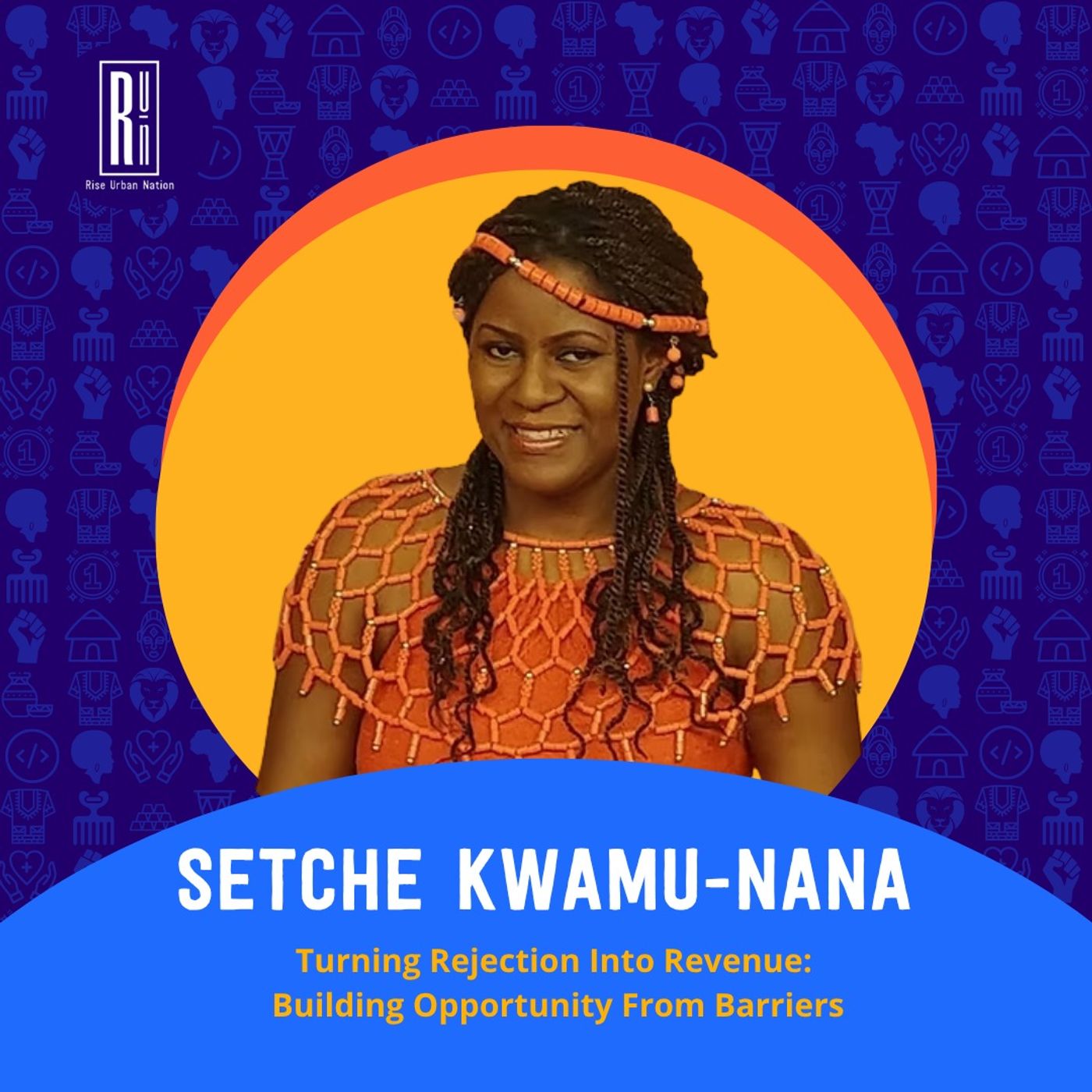
Introduction and Who Is LaToria
Taryell Simmons: Welcome, ladies and gentlemen, to another episode of RISE Urban Nation. I got my dear sister LaToria in the building today, and she came in full of energy. I hope I can match it. LaToria, how you doing this morning? What part of the country are you joining us from?
LaToria Pierce: Good morning! I'm in the DC area, the DMV. I've been here about seven years, so I've got my honorary badge. I was born in Indiana, lived overseas because my dad was military, and grew up mostly in Arizona. The tech startup world is really starting to thrive out here.
Taryell Simmons: The DMV is my hometown. For the people who may not know you, who is LaToria?
LaToria Pierce: I feel like a mosaic of things. I'm a storyteller at heart. I'm a recent tech CEO and founder with a background in marketing, media, public engagement and entrepreneurship. I love to dance, and I'm learning samba right now. I love to travel and a good conversation. The relationships we build are the most valuable.
From Social Impact to Tech Founder
Taryell Simmons: I didn't learn about tech and startups until way after college. How did you get introduced to this world?
LaToria Pierce: Same. When I came to the DC area, I worked under a great mentor with the AARP Foundation, which creates products and tools for older working adults, and with a fintech startup here in DC. Then my mentor and project lead told me about an opportunity: Ideas42 Venture Studio, a global venture studio also based in DC, was kicking off an inaugural cohort to back entrepreneurs with lived experience to build tech solutions that eliminate the excess costs of poverty. At first I thought it didn't sound like me, but a couple of days before the deadline I put the application in, and with each round I saw more of the opportunity. My mom was a teen mom, so it was a chance to give back to the young moms and kids who had walked a mile in our shoes. I loved the idea of tech letting that impact scale.
Taryell Simmons: I love lived experience as the entry point into tech. What was the cohort like?
LaToria Pierce: We're early stage, pre-seed, building traction, but off to a significant start. Every founder will tell you this is one of the hardest things they've ever done. It is hard, and B2B SaaS is a different beast, but lived experience gives us thicker skin. I've had days where I break down crying, and then you stand up and figure things out. As Denzel Washington says, fail forward. It's a Captain Planet situation: somebody's earth, somebody's wind, somebody's water. You can't be everything. You have to be in it to win it, but you don't have to be 100% prepared for everything. It's not about perfection. It's putting one foot in front of the other.
LaToria Pierce: To be fully transparent, I didn't have what they call network capital in this space. It was a network deficit. I was recently accepted into Project W Tech Equity Hub, which supports about ten female founders of color. There are people of every background who want to get behind founders of color. Be open to that support and don't give up.
Building Networks and the Right Team
Taryell Simmons: Why is it important to have the right people on your team to accomplish your dream?
LaToria Pierce: We can't know it all. Other founders have been so helpful. Shout out to my good friend April, whom I met at an All Raise event here in DC. Her team just raised a seed round, and she offered to look at my deck and make introductions.
LaToria Pierce: When I was younger, people would say, "You have everything you need inside of you," and I'd think, what does that mean? I've learned it's true. The core characteristics you sharpen over time keep you going, and that understanding evolves. For the network piece, show up in spaces where what you're passionate about is the main conversation. If I want to learn samba, I find a samba class. When I show up, I meet people who have been to Carnival in Brazil. Business is the same. I showed up for All Raise DC and DC Startup Week events and made great connections. Even just one connection is significant.
Taryell Simmons: Startup Week in San Diego is how I got my start in tech too. What's one thing you want to accomplish, and what obstacles stand in the way?
Handoff and the Job Share Model
LaToria Pierce: My early-stage startup, Handoff, builds software around a job share model that enables two people to share one full-time job. We help employers build more inclusive teams and get faster access to untapped talent pools, like breadwinning moms and working parents who want career-building work but need flexible hours. Europe has used this people-centered model for decades. Talent shows up in droves. The challenge is educating employers. At its core, a job share is the essence of team, but employers get stuck in old structures. With labor shortages and so many women who left the workforce during COVID, organizations can keep their structures and make room for diverse talent with the skills they need. They just need fewer than forty hours a week, and Handoff makes that easy.
Taryell Simmons: This is brilliant, and timing to market is everything. Working parents and single mothers felt these past two years. People are asking what work-life balance, or harmony, looks like for them.
LaToria Pierce: I love that word, harmony. Balance has been a luxury people in entry- to mid-level roles couldn't afford, and job shares make it more equitable. Whether you're the CEO or the EA, you should have balance. Harmony is even more people-centered. If you take care of your team, productivity and outcomes will follow, and that includes getting people of color and women into leadership. But you have to give people space to show up, including being at home for the people and moments that matter.
Staying Grounded and Self-Care
Taryell Simmons: As the child of a single mother, you understand the importance of showing up as your full self. How do you stay grounded with all this work of changing the world of work?
LaToria Pierce: My commitment to myself this year was to be vulnerable in public spaces, so I'll be fully honest: it's a daily effort. My greatest tools are a self-care plan and boundaries. Sometimes a project interrupts and I'm going to bed at 2 a.m. Don't do that. So I start my day with my me-and-God time: prayer, meditation, reading, jazz, yoga or a walk. My mother always says the work will always be there. The differentiating factor is that we won't. Around 6:30 I shut it down for the gym, samba, Spanish and loved ones. Saturdays I clean with good music, Bad Bunny one week, the Fugees the next.
Taryell Simmons: Thank you, mama, for that wisdom. If someone doesn't know what grounds them, what would you tell them?
LaToria Pierce: That requires inner work, and I don't run from doing the work. A lot of times we let other people and life experiences define what grounds us. But the answer is at our core, in that inner decision-making space where you decide how you want to take care of you and how to say no. As a leader, you don't have to always be available. The biggest influencer of how we ground ourselves should be self. Think about what naturally makes you happy. Dance around your house, put on India.Arie or Lauryn Hill, cook. Being grounded doesn't always mean being still. It's creating space for the mind to focus on something that brings peace and clarity.
Taryell Simmons: Y'all, she told me she's an eighties baby, and these eighties babies look younger than everybody.
LaToria Pierce: It's God and my mama's genes. When you feel good on the inside, it reflects outward. And I don't attach youth to age. Youth is the audacity to believe, to hope and to use your imagination.
First Jobs, Grit and Paying It Forward
Taryell Simmons: Students I've worked with often expect a big job right away. What was your first job?
LaToria Pierce: My first business was at 12. My sister was 14, and our community offered a babysitter certification with CPR, so we started a summer babysitters club. We ran it from 6:30 a.m. to 6 p.m. with pickup, lunch and activity schedules. We made money, and parents came back. I think entrepreneurship is in my DNA. My first applied-for job was at seventeen, at an AMC movie theater in Arizona.
Taryell Simmons: Me too! AMC Silver Spring, Maryland, gave me my first W-2 job.
LaToria Pierce: We need an alumni association! I've always loved storytelling. I put myself in spaces near what I enjoy, even a movie theater. My mom taught us that just because someone holds a position doesn't make them right. What's honest and respectful is what's right. So if a customer yelled, I'd fix it, but we were not going to argue, with a smile, respectfully, before respectfully was trendy.
Taryell Simmons: Some little girls are going to be inspired by you. What steps did you take to build your career and business?
LaToria Pierce: Mine was nontraditional. It was a lot of blood, sweat and tears, but there was always somebody. A friend's book, The Purpose Factor, calls those people cheerleaders. Growing up in Arizona when there were few Black people, teachers and professors asked what made me think I could do the things I wanted to do. At a newsroom internship, the executive producer, a Black woman, told me, "If you think you're going to get a job here, give up the idea. They pick one person of color, and that's in place." So I knew I might have to build things myself. I had grit, and I've always believed that if I believe I can, then I can. In high school and college I'd call Paramount Pictures and Warner Bros. and hold for hours to learn the business. My parents didn't always have the means to invest in what I wanted, so we choreographed dances in the backyard, rewinding Janet Jackson videos. Moving to DC was a leap of faith. I roomed with a family friend, volunteered, and volunteering turned into work. Know where you want to go, get into those rooms and ask for help.
LaToria Pierce: People may disagree, but not every exchange should require "what's in it for me." Someone new or young may not have anything to exchange yet. I believe in being benevolent and having grace. A student calls me once a month. I make time for her because she's a student of the process, and I get to make a deposit without asking for anything back. When you're in a position to do so, pay it forward. Adversity is inevitable, but so is purpose. My mom says the finish line is for you, that's where the celebration happens, but the journey to get there is for the people you'll serve.
Lessons, the Future of Work and Closing
Taryell Simmons: RISE Urban Nation, I hope you had your pens out for that: grit, grace, leaps of faith and making deposits. What's one good lesson life has taught you?
LaToria Pierce: You won't always feel passionate about things, so on those days you have to be driven. And don't be afraid to fail forward. What is life if we don't take chances to show up as we are and tell our story?
Taryell Simmons: What does the future have in store for your industry?
LaToria Pierce: I believe Handoff is the future of work. Job sharing is going to become a norm that opens opportunity for breadwinning mothers, working parents, caregivers, older working adults, immigrant workers, veterans and Gen Zers brave enough to say, I'll do what I love, but I'll take care of me too. The future of work will be more inclusive, not because we talk about it, but because we activate solutions.
Taryell Simmons: What are you working on, and where can people find you?
LaToria Pierce: I'm sleeves rolled up building Handoff, and I'm also looking for ways to get back into helping people and founders tell their stories. Connect with me on LinkedIn as LaToria Pierce. Find out more about Handoff at teamhandoff.com and across social channels at teamhandoff.
Taryell Simmons: Any last words of wisdom?
LaToria Pierce: If you missed the gems, play it back. We don't know enough about tomorrow, so today, value yourself and put yourself first. Then take care of you, and turn around and take care of somebody else.
Taryell Simmons: I'll put her information in the show notes. LaToria, thank you for talking with RISE Urban Nation. We salute you, we celebrate you, Queen, and we're cheering for you.
LaToria Pierce: I appreciate you so much. This has been an amazing conversation. Thank you so much for having me.