Introduction and Cultural Roots
Taryell Simmons: Good morning, afternoon, or evening to everyone listening across the world. My name is Taryell Simmons, host of Rise Urban Nation. We have a special guest in the building today. Mr. Kamm Howard, how are you today, and where are you joining us from?
Kamm Howard: Good morning. I am joining you from Chicago and having a great morning. Thank you.
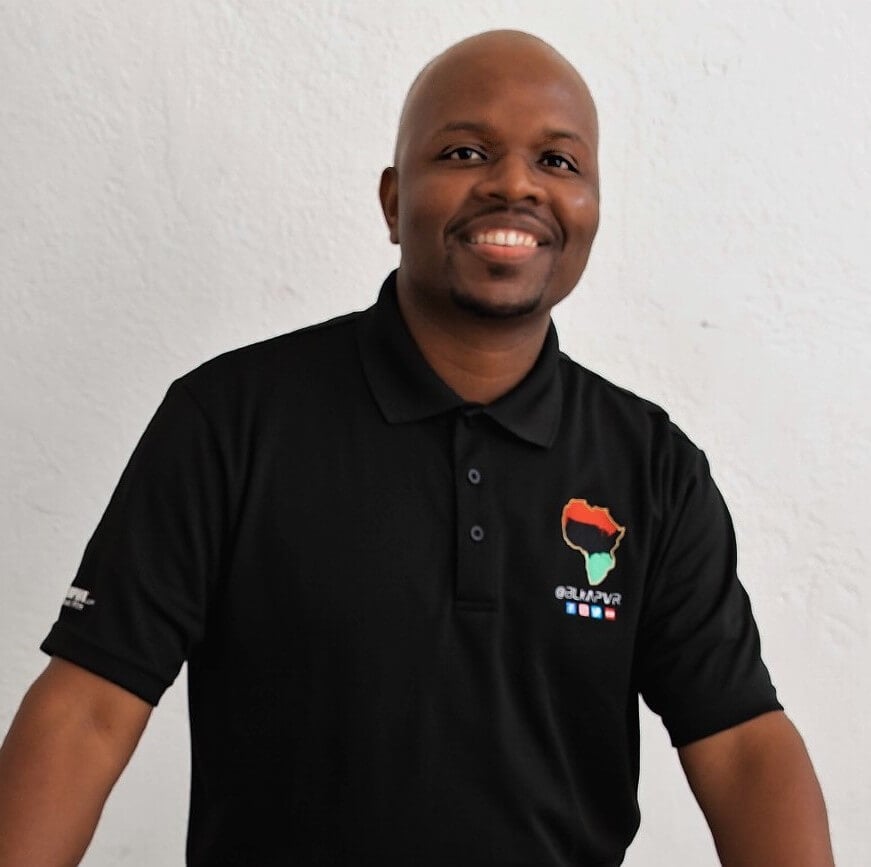
Taryell Simmons: For those of you who have the visual experience, Kamm has on this extraordinary cloth. Tell us about this outfit, because it feels like it has a story all by itself.
Kamm Howard: The cloth came from Ghana. I was in Ghana at a global conference on reparations and healing, bringing activists from around the world. I found some material I liked, brought it back to my tailor in Chicago, and had him design it.
Taryell Simmons: I love it. I am of Nigerian descent, and when my father goes back home, he brings cloth back. You have to make sure you find the right tailor because we are very particular about not wasting good cloth.
Kamm Howard: I have had that problem before as well with tailors who did not know what they were doing with the material.
Taryell Simmons: You mentioned the reparations conference, and we will unpack that shortly. But let us start here: for those who do not know, who is Kamm Howard?
Kamm Howard: I am a student and product of the historical journey of Black and African people in this country. From enslaved forebears to parents and grandparents who faced immense challenges, I inherited the desire to rise up, contribute, and uplift our people. I am a community organizer in the reparations movement, a real estate investor providing spaces for Black-owned businesses, and a family man dedicated to the upward mobility of our community.
Entering the Reparations Movement
Taryell Simmons: Were you always in the reparations movement? How did you first get into it, and what should people know about the movement?
Kamm Howard: I entered the movement well after high school and have been involved for about sixteen years. I first encountered the term reparations in a book by Dr. Maulana Karenga, which mentioned N'COBRA, the National Coalition of Blacks for Reparations in America. After achieving success in business, I was introduced to a meeting of that organization and joined. Initially, I wanted to focus on health because our community faces severe health disparities and mental health challenges. However, when I looked at reparations, it addresses health, economics, family, criminal justice, and the entire spectrum of challenges we face. Reparations is redress for crimes committed and debts owed. At the 2001 World Conference Against Racism, slavery, colonialism, and apartheid were declared crimes against humanity with an obligation to pay reparations. We are working feverishly to get the federal government to engage in redress, and nearly one hundred municipalities and several states are now joining the discussion.
Global Accountability and Church Redress
Taryell Simmons: Is there a global movement looking at crimes committed against Africa by European nations like France and the United Kingdom?
Kamm Howard: Yes, activity is vibrant globally. The Caribbean nations created the CARICOM Reparations Commission to target European governments including France, Britain, the Netherlands, Spain, and Portugal with a ten-point platform of demands. In America, the National African American Reparations Commission patterned a similar ten-point platform. At the global reparations conference, activists gathered from the Caribbean, the Americas, Africa, and Europe. Last July, I led a delegation addressing the Catholic Church's historic role. The church inaugurated the transatlantic slave trade through papal bulls ordering the Portuguese government to plunder, rob, and commit African people to perpetual enslavement. That created six hundred years of destruction that still affects us today, leaving African nations at the bottom of development indices while European nations sit at the top. We presented documentation demanding the church atone and respond.
Taryell Simmons: How would that awareness change the relationship Black Christians have with religious institutions if they knew the church needed to atone for its sins?
Kamm Howard: Awareness is expanding. The World Council of Churches is engaged, the Church of England committed one hundred million dollars toward reparations research, and the Union for Reform Judaism has signed on to the Black reparations struggle. As more Black people learn this history, they will demand that parent institutions engage in redress.
Federal Strategy and Political Power
Taryell Simmons: What is the path forward for institutions and government?
Kamm Howard: The path forward is directing resources into our community. Reparations is fundamentally about resources. Some churches are establishing community funds or opening spaces for reconciliation. However, our collective focus must remain on the federal government, which was the major player and benefactor of stolen African labor and the destruction of Black communities.
Taryell Simmons: What is the current political strategy to achieve federal redress?
Kamm Howard: The primary thrust is urging President Biden to enact a reparations commission via presidential executive order. While a commission bill exists in Congress, the political reality in the House and Senate makes passing legislation impossible right now. An executive order is the viable path. The Black vote has delivered every Democratic president since 1960, with the exception of 1964. If elections were determined solely by the white vote, only one Democratic president would have won since 1960. We are not receiving the policy return we deserve for that electoral power.
Taryell Simmons: How can Black people be efficient in their resistance and leverage legislative power?
Kamm Howard: In the House, there are over fifty Black members of Congress. The challenge is that the Congressional Black Caucus does not vote as a unified bloc. When a group moves as a unified bloc, they can extract significant compromises and policy commitments. Black elected officials must utilize collective political force rather than merely individual influence.
International Law, Sovereignty, and Identity
Taryell Simmons: Audre Lorde noted that you cannot use the master's tools to dismantle the master's house. Can we rely on existing governmental systems, or is there an alternative approach?
Kamm Howard: We can utilize international legal instruments. Under international law, African Americans are a national minority. When the Fourteenth Amendment made us citizens, we were denied the right of self-determination to decide whether we wanted to remain, establish a separate governing body, or integrate. A petition is currently being advanced to the United Nations and the International Criminal Court asserting that citizenship was imposed and calling for a plebiscite—a national vote allowing our people to determine our political status. America is a multinational state with over four hundred sovereign Native American nations receiving federal trust resources. Similar sovereignty and targeted resources could be established for Black Americans.
Taryell Simmons: What are your thoughts on the Back to Africa movement and the founding of Liberia?
Kamm Howard: There are two distinct movements: colonization and Back to Africa. The colonization movement was initiated by white leaders to relocate Black people, resulting in Sierra Leone and Liberia. In contrast, the Back to Africa movement—championed by Paul Cuffee, Marcus Garvey, and the UNIA—sought to return to Africa with resources to rebuild. Garvey negotiated land in Liberia and sent millions of dollars of equipment before corporate and government pressure halted the effort. The desire for repatriation remains alive. Today, many African Americans are tracing their lineage, participating in homecomings to countries like Ghana and Guinea-Bissau, and securing dual citizenship.
Taryell Simmons: Many Black Americans feel disconnected from their African heritage. How does reclaiming identity aid liberation?
Kamm Howard: The miseducation of Black people in this country is immense. Our survival in America was due to the ancestral cultural knowledge brought from Africa. Divorcing ourselves from that identity forces us to view the world through another lens. When we view reality through an African-centered lens, we can align our actions for the collective benefit and upward mobility of our people.
Economic Ownership and Business Representation
Taryell Simmons: How has representation shaped your life and worldview?
Kamm Howard: Early on, I was limited by seeing small family businesses that were not passed down across generations. In 1970s Chicago, however, national Black-owned corporations flourished, such as Johnson Products Company, Evans Potato Chips, and Baldwin Ice Cream. Seeing those enterprises provided immense inspiration. Today, many community businesses are owned by outsiders. We must expose young people to commercial ownership, enterprise, and digital innovation so they envision broader possibilities.
Taryell Simmons: How do you support Black-owned businesses locally?
Kamm Howard: In real estate and property renovations, I intentionally hire Black professionals across the entire supply chain—realtors, architects, attorneys, and construction trades. Keeping capital circulating within the community builds collective economic strength.
Real Estate Mentorship and Career Advice
Taryell Simmons: What was your very first job?
Kamm Howard: My first job was cleaning bathrooms and sweeping outside my family's store around age eight or nine. My mother insisted on excellence, teaching me to do every job correctly the first time before going out to play.
Taryell Simmons: How did you get into real estate and balance it with advocacy?
Kamm Howard: I was inspired by my great aunt, who built substantial passive income from owning dozens of apartment units free and clear. She mentored me and helped me purchase my first four-flat property. Later, I earned an MBA with a concentration in real estate to execute larger transactions. That business success provided financial freedom and time flexibility, allowing me to dedicate substantial time to organizing in the reparations movement.
Taryell Simmons: What essential lesson has life taught you?
Kamm Howard: Discover your mission and devote yourself to it. Purpose drives persistence through challenges and brings fulfillment. Without a defined mission, individuals wander without direction.
Taryell Simmons: What advice do you give someone seeking to start a career in real estate or reparations advocacy?
Kamm Howard: Continuous education is essential. In real estate, establish two years of steady employment or tax returns, maintain strong credit, and save for a down payment. Seek free educational resources before spending money on costly seminars. In reparations, educate yourself on movement history. Grant funding and organizational growth are opening numerous professional and grassroots opportunities in the field.
Reparations Unity Tour and Final Thoughts
Taryell Simmons: What is your vision for the future of Black real estate ownership and reparations?
Kamm Howard: We must expand beyond residential homeownership to own commercial real estate, strip malls, apartment buildings, and industrial spaces. In the reparations movement, growing institutional funding will create expanded career pathways and systemic redress.
Taryell Simmons: What projects are you currently leading, and where can listeners connect with you?
Kamm Howard: I am leading the Reparations Unity Tour titled 'The Mission, The Mandate, The Method.' The mission is securing a presidential executive order for a federal reparations commission. The mandate is drafting a master plan of redress across economics, housing, criminal justice, and health. The method is unifying diverse organizations around shared goals. Connect with us at reparationsunited.org or email [email protected].
Taryell Simmons: Do you have any final words of wisdom for the audience?
Kamm Howard: Stay focused. We are winning, we can win, and we are determined to win.
Taryell Simmons: Thank you, Kamm. Thank you everyone for tuning in to Rise Urban Nation.