Introduction and Early Career
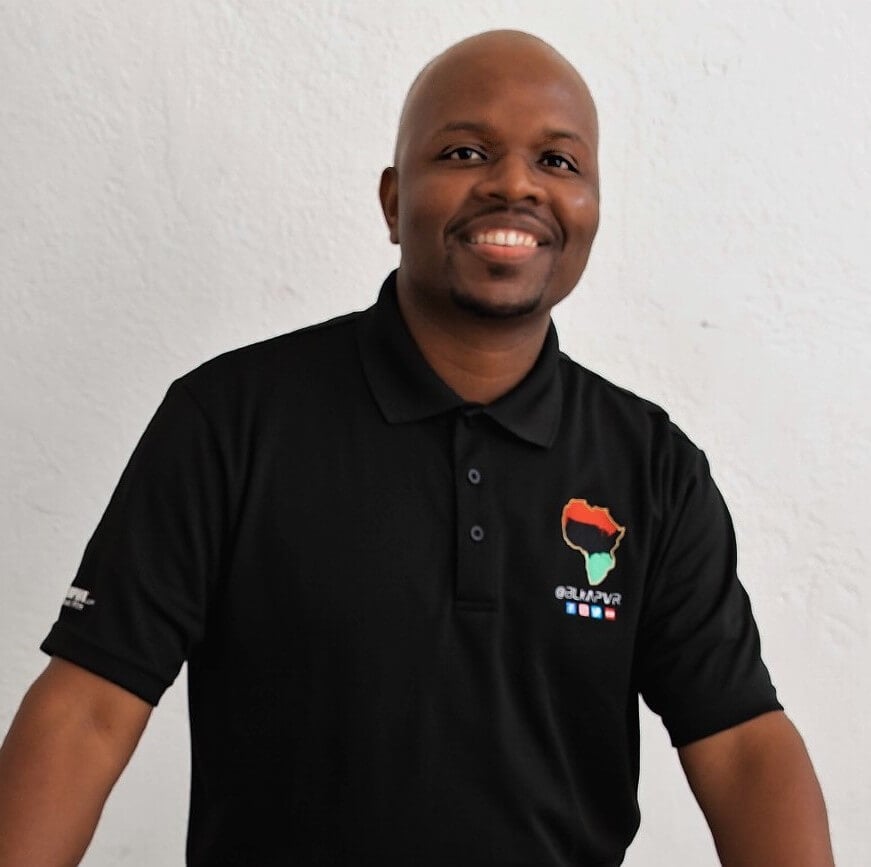
Taryell Simmons: Welcome, ladies and gentlemen, to another episode of RISE Urban Nation. I got a special treat in the building today: my brother from another mother, Mr. Jason Roberts. This has been a long time coming. We first met through Village Up, an initiative here in San Diego that helps underserved founders with resources, career development, and community. So for the people who don't know, who is Jason Roberts?
Jason Roberts: Jason Roberts is a work in progress. I'm someone who keeps growing and learning about me and those around me. I try to be a great husband and a great father to three amazing kiddos, an honest and trustworthy friend, and someone who provides good counsel and mentorship. Some days I fail, but failure's not a bad thing. As I've gotten older, I've learned to appreciate life, appreciate what's been given to me, enjoy it, and help others along the way.
Taryell Simmons: Your first job out of college was as a production facilitator with Johnson and Johnson. Tell me how that journey started.
Jason Roberts: I went to the University of Texas at Austin, Hook 'em, and I thought I wanted to be an engineer. But through a co-op, working as a metallurgical and maintenance engineer, I realized this wasn't for me. I was so far along that I stuck with it and got a minor in business. That led me to Ethicon, a Johnson and Johnson company in San Angelo, Texas. Right out of college I was leading a production team of about twenty-five people on the second shift. That was my real introduction to corporate America, working alongside people and leading people, and I drew from it throughout my career.
Jason Roberts: It was a challenge on the home front. Tie and I had just welcomed our first son, and we were far from our support system. Tie had the hard part, because she was on bed rest from month four on. In my upbringing there weren't a lot of "I love you's." You modeled the behavior, and the behavior was working all the time. But we were fortunate to have people around us. George, a facilitator on the first shift, took us under his wing, and Tanya Harris, who ran operations out there, took good care of us.
Values, Mentors and Losing His Father
Taryell Simmons: Who grounds you when you have to make tough decisions?
Jason Roberts: It's less of a who and more of a what: my value system. It's evolved. Compared to my younger self, it's a lot less materialistic and self-centered and more grounded in purpose: being honest, being a good listener, providing good counsel, helping others instead of acquiring status or material things.
Taryell Simmons: How did you get to those values, especially after the corporate hustle?
Jason Roberts: Two things: life events that forced me to reset, and strong mentors who gave me radical candor. The first big event was losing my dad, and the manner in which I lost him, to suicide, on February 13, 2006. He was the epitome of strength to me. He never stopped working, he was highly respected in every circle, and he was the first Black person to get a PhD in mathematics from Texas A&M University. In October of that year, I left consulting. It had been bred in me to just work, and I was on track to be a partner, but I was already feeling the stress on my home life. I asked myself what kind of person I wanted to be when I got older. The latest big life event was having a stroke at forty-two years old. That was the last straw for me.
Mental Health, Therapy and Breaking the Stigma
Taryell Simmons: In the Black community we often associate strength with not acknowledging our mental health. Does your culture or background influence how you think about mental health?
Jason Roberts: I've come full circle. Back in the day I thought it was a sign of weakness. That's how I was programmed to think about being a man, a provider, a caretaker: you don't talk that way. We're also often taught that prayer is the end-all and be-all. It's absolutely helpful, but there is no substitute for getting in the room with a trained professional. In our community, asking for help can be viewed as weakness, let alone talking about mental health. The good thing is it's becoming more acceptable, because we're having conversations like this. Mental health is not a sign of weakness. Being vulnerable is a superpower. If it had been more acceptable in 2006 for the provider to go talk with someone, I believe my dad would still be here today.
Taryell Simmons: As my grandma used to say, faith without works is dead, so prayer without works is dead too. What are three things you do to keep your mental health in check?
Jason Roberts: First, I have a therapist. I started seeing her shortly after my stroke.
Taryell Simmons: Let me pause right there. A lot of Black men would never say that out loud. How did you get over that?
Jason Roberts: There was a stigma to get over, but my dad's story touched me firsthand. I knew how I was feeling, that emptiness and loneliness, and I had seen what that looked like to the extreme. She helped me immensely. She helped me understand that it's not always one major event. Small events in childhood program you, and you start to realize why you do the things you do. That self-awareness helped me deal with later setbacks, including the ones that come with entrepreneurship.
Jason Roberts: Second is meditation. There's a good book called Psycho-Cybernetics about how meditation can reprogram your unconscious mind, reaffirm your self-image, and help you see yourself reaching your goals. Third, I try to stay in shape. When I'm in good physical shape, my mental state is better, my decisions are clearer, and I'm more decisive. Wellness also includes the emotional and the social, so I reach out to friends and try to be a sounding board for others.
Taryell Simmons: Do you feel balanced between work, family, friends, and self-care?
Jason Roberts: I get unbalanced from time to time, and I can feel it. If I haven't worked out, missed meditation, or haven't talked to friends in a while, I feel the difference. When I feel unbalanced, I pick up the phone, do a quick thirty minutes in the garage, or meditate before my head hits the pillow. It's always a work in progress, but the key is being self-aware enough to self-correct.
Young People, Social Media and Responsibility
Taryell Simmons: Suicide among young people has risen since the pandemic. How are mental health issues affecting them?
Jason Roberts: It's affecting how they view themselves and their confidence in their own skin. They have challenges we simply did not have, like social media. You and I can discern that people only present the picture they want you to see. Kids don't necessarily get that, so they're raised to think that if they don't achieve that look or that status, they're a failure. They're measuring themselves against unrealistic images, and that contributes to depression and anxiety. Technology becomes a source of validation, how many likes did I get, and it ties back to a materialistic value system.
Taryell Simmons: What's the most important thing you learned about your mental health this year?
Jason Roberts: No matter what happens, I am responsible. I might not be at fault for my circumstances, but I'm responsible for them. Mark Manson talks about responsibility and fault in his book, The Subtle Art of Not Giving a F*ck. Tragedy may hit you hard, but you're responsible for how you respond. The alternative is victimhood, and that just leads to a spiral. A trained therapist can help you see that different perspective, because getting there on your own is extremely hard.
Frontline Careers and People and Profit
Taryell Simmons: Tell us about Frontline Careers. What is it and how do you do it?
Jason Roberts: Frontline Careers is a San Diego County based startup, and our mission is to connect frontline workers looking for more with companies that offer more. Frontline workers are the men and women who have to be present to do their jobs, often hourly positions that are overlooked, undervalued, and underappreciated. We do it two ways. First, our proprietary Frontline Friendly assessment, based on anonymous feedback from current frontline employees only, not VPs or corporate folks, because their experience can be way different. If a company passes, it's certified as Frontline Friendly, which tells job seekers, customers, and even investors that it really cares about its people. Second, we have an exclusive job site featuring only jobs that offer more than just pay. Our first certified company is Little Cakes Kitchen in Vista, and more companies are entering the assessment queue. Our vision is that one day every frontline worker will work for a Frontline Friendly company.
Jason Roberts: The shift started before COVID. In August 2019, the Business Roundtable updated its statement on the purpose of a corporation to include employees and their well-being, not just profits. Then COVID hit, and workers started to realize their value. We want to make it easier for them to find more. Our assessment helps them uncover areas for improvement across eight dimensions, because employees aren't always honest directly with their employer.
Taryell Simmons: How did your personal journey lead to this?
Jason Roberts: There was a lot of stress leading up to my stroke, and part of it was a misalignment between my values and what I was experiencing. I was promoted and moved to Southern California to run operations, and I saw firsthand how frontline workers were treated where I was: the lack of dignity and respect. Never was it asked, how are the people doing? I was also trying to be somebody's first Black VP of operations and wearing other people's expectations. I believe all of that culminated in the stroke. Less than six months later, I heard Mike Rowe from Dirty Jobs tell business leaders we have to put more emphasis on skilled trades and invest in those roles. That was the genesis. I'd met so many talented, motivated frontline workers who just needed investment. And it's not people over profit, it's people and profit. They're not mutually exclusive. I called Tie first, then our co-founder Ari, an IO psychologist. That was 2018, and I left in 2020, right before the pandemic.
Taryell Simmons: You're a brave man to start a business right before the pandemic.
Jason Roberts: I probably still would have done it. I'm convinced this is where things are going. Job quality matters. With around 11 million open positions in the last jobs report, there's no denying that some people are saying, I'm not going back to that.
Corporate America as Training Ground and Closing
Taryell Simmons: What steps did you take to transition into entrepreneurship?
Jason Roberts: The steps started many years before. Corporate America prepared me. I started on the front line in that production plant and ended on the front line in the waste industry. As we got started, I was rolling up my sleeves and coding, skills I learned as a TIBCO developer in consulting. I also made sure my finances were in order and had alignment with my family, and Tie is integrally involved. We're by no means a glowing success yet, but we will be. I always heard friends say, corporate America ain't for me. I'm writing a book called Corporate America Is Not For Me, with the "not" crossed out, because it is for you. Learn what you can, make a move, learn more, make another move, and you're learning on someone else's dime. Focus on the learning, because once you've got it, it can't be taken away.
Taryell Simmons: What does the future hold for your industry and for the Black community?
Jason Roberts: There's a shift toward the quality of jobs. We're about 13 and a half percent of the US population, but we're overrepresented in frontline industries like retail, transportation, and grocery, so a shift to better frontline jobs is going to help us. Our goal is for the Frontline Friendly certification to become the known standard for companies that value their frontline workers.
Taryell Simmons: What projects are you working on, and where can people find you?
Jason Roberts: Besides the book, we have a podcast in the works called Tales from the Frontline. Frontline workers are our primary customers, so we want to give them the platform to tell their own stories, and we just help amplify them. You can email me at [email protected], find me on LinkedIn, and learn about our Frontline Friendly certification and exclusive job site at frontlinecareers.com.
Taryell Simmons: Jason, it's been a pleasure, my brother, and perfect timing during Mental Health Awareness Month. That's another episode of RISE Urban Nation, and we'll catch you next time.