Introduction and a Friendship Built in the Community
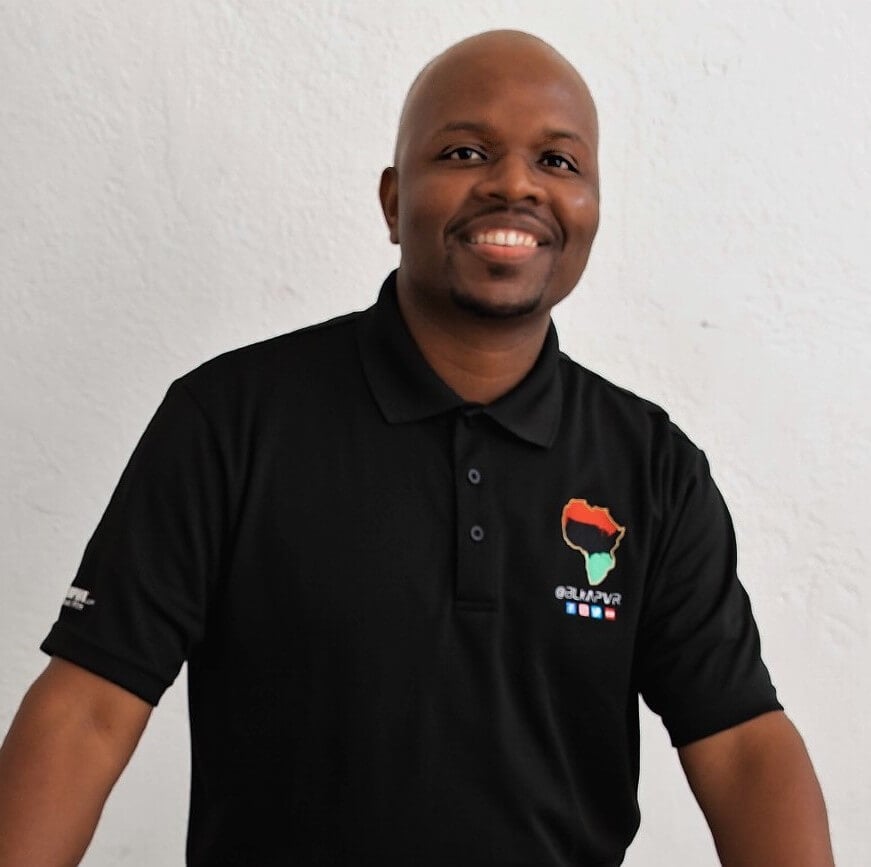
Taryell Simmons: Welcome, ladies and gentlemen, to another episode of Rise Urban Nation. It's your guy, Taryell Simmons, in the building, and I've got a special guest. This brother is about to drop more financial literacy on you than an Earn Your Leisure episode. No pressure. This is my good friend, my brother, Mr. Irvin Spencer. How are you doing this fine day, sir?
Irvin Spencer: Man, I am awesome. That's the best way to put it. God is good.
Taryell Simmons: I love that we start with that energy. For the people, how did we first meet?
Irvin Spencer: We met at the downtown library at one of Jarvis's events. I think we crossed paths in the parking garage and I just started talking to you. Since then I've kept seeing you at community events like Brothers with Ties and the Blue Heart Foundation, working with kids.
Taryell Simmons: Our first sit-down was supposed to be 45 minutes, and we talked for hours. You've been helping my family ever since. And a special shout out to the Blue Heart Foundation and our dear brother Tracy, who has left this physical earth. Rest in power, brother.
Irvin Spencer: That hit me too. He put so much love into the kids he worked with. As a community, we can't let that work fall by the wayside.
Taryell Simmons: And we won't. For those just tuning in, who is Irvin Spencer?
Irvin Spencer: That's a complicated question, because I don't narrow myself to one or two things. In college people saw me as a football player, but I used football to get my education. After reading The Power of Now, I try not to attach too strongly to any role and just show up as my best for the people around me. But I'm a father and a husband, a financial advisor downtown, an O-4 lieutenant commander in the Navy Reserve, and a coach on my sons' teams.
Losing His Mother and Learning to Teach Himself
Taryell Simmons: You once educated me on how families can plan ahead instead of holding fish fries to cover funeral costs. What key events led you to this career?
Irvin Spencer: There was a series of events, and I didn't understand how God was using them until I tied them together. I'm originally from Cleveland, Ohio. The first thing that changed my trajectory was my mom dying when I was eleven. My little brother and I were home, we heard a thump, and we found her on the bathroom floor. She'd had a heart attack.
My stepfather adopted us, which kept my brother and me together, but his vision for us didn't match my mom's. He was born down south in the thirties and wanted me in a trade, not sports, yet sports earned me a full scholarship. My senior year, we fell out over the Social Security money from my mom, and I moved into my best friend's basement before college.
Another moment came here in San Diego when I was a sophomore in college. I met a senior Black officer who had been in charge of the ship from the movie Antwone Fisher, and he told me he was already a millionaire. I'm good at asking questions, so I asked, "What would you do differently if you were me?" He said, "I would have started investing my money sooner." That was all I needed to hear to start learning on my own.
I've always been self-taught. In fifth or sixth grade, kids called me Chubby, so I got library books on dieting and working out and changed my body in about a year. At the Naval Academy I read books between classes.
Taryell Simmons: I already had an advisor, but you still sat down and educated me, and that's when I decided to set my family up with you. Where does that desire to help come from?
Irvin Spencer: My purpose is to have a positive impact on people's lives, and this job gives me a unique way to do it. I've been in doctor's offices where it was clearly a transaction, and I don't want to create something I don't resonate with. We all have limited time, energy, and money. Let's use them as smart as possible.
Chase Purpose, Not Income
Taryell Simmons: Intent matters, but impact matters more, and we're often pushed into careers that aren't aligned with our purpose.
Irvin Spencer: At my school there was one guidance counselor for a whole grade. How can one person find three hundred kids' purpose? The systems are broken at the foundation. So I tell people: don't chase income, chase purpose. Income comes when you're in alignment with your purpose. I've seen people take pay cuts because their purpose wasn't being fulfilled.
Taryell Simmons: I made the most income when I was connected to passion and purpose. How does your job fit yours?
Irvin Spencer: Money is connected to people's experiences, hopes, fears, and desires. The more I hear their stories, the better I can connect their money to what they want to create. Money is a tool, and I help people use it that way, without fear or greed.
The biggest problem I find is that people don't have clear definitions before they put their money to use. So I ask three questions and just let them talk, with no judgment. First, what does financial security mean to you? Second, what are the biggest risks to achieving it? Third, what have you done to prepare for those risks? Asking all three peels the onion back and lets people slow down and see whether they're in alignment with what they said was important.
I plant seeds, but you need a relationship to keep watering them. With your brother in New Jersey, we've had five conversations over two weeks, one topic at a time. In this industry we're often too busy to make sure a person gets from beginning to end.
From Pulling Weeds to Financial Advisor
Taryell Simmons: Everybody has humble beginnings. What was your first job, and what did you learn?
Irvin Spencer: Landscaping for the city. They'd drop us at one end of a two-to-three-mile street with a bucket and a trash can to pull weeds. Working around 30- and 40-year-olds at 16 told me I didn't want to work with my hands forever, and because I asked questions, those men would say, "Irv, learn from our mistakes." One of them sold me my first car, a Cutlass Supreme with Corvette pearl paint and T-tops, the cleanest Cutlass in Cleveland. My cousin got caught up with drugs, so I stayed away from that path. If I see fire, I don't have to touch it.
Taryell Simmons: Positive male mentors, grit, and hard work. How did you get into the financial industry?
Irvin Spencer: The title "financial advisor" means different things at different institutions. At a bank, an advisor may only discuss the Roth IRA they oversee, not your emergency savings, benefits, or estate planning. For me, it goes back to that officer. As a junior at the Academy we received thirty thousand dollars; I used ten for my ring and other things and invested twenty, and my roommates and I traded stocks and taught ourselves.
As a naval officer, I enjoyed helping my sailors with school, finances, whatever they needed. When I was getting out of the military, I met a friend who works at my current company, and he put me on. But before becoming an advisor, I was a client of an advisor at another company for about a year, to see what that experience was like.
What Generational Wealth Really Means
Taryell Simmons: Financial literacy and generational wealth are becoming part of the culture. How would you define generational wealth?
Irvin Spencer: It's a complicated term, and we use it too loosely as a buzzword. People think what works for somebody else will work for them, like real estate, where you hear the good stories but not the bad ones. For me, generational wealth starts at home. It starts with community: I'm always looking for other men who can help my kids in areas I can't. When my mom passed, it was the women from our church who picked up my brother and me and kept us in the activities she would have wanted. It takes a community.
It's opportunities: my mom moved us from the inner city to a suburb, and not walking past corner stores let me think differently. It's experiences: my boys, five and eight, play flag football, basketball, and baseball, and I even bought them a guitar. And it's education: my wife stays home with them, and we read and look up words together daily. None of that requires money. I'm also writing a memoir with thirty to forty pages on financial literacy, so my kids learn those lessons from me whether I'm here or not.
It's being a good example. My name means something; my little brother followed me in school and heard, "We know what Irvin does." That's legacy. The next step is making sure my wife and I are never a burden on our children, so before I spend any dollar, retirement and insurance are taken care of.
Taryell Simmons: He just gave you about twelve bars, and most of them don't require money.
Irvin Spencer: My mom was a beast. She worked, but she was in the PTA, and she made it clear homework came first, so I kept doing it after she was gone. After trauma, you can make it a crutch, or memorialize the person and use what they wanted for you as fuel. She'd tell me, "You always take care of your brother. You be a good example." I wasn't going to fail her.
Protecting Your Family and Avoiding Common Money Mistakes
Taryell Simmons: Break down phase one: making sure your family is never a burden.
Irvin Spencer: First, thoughtful life insurance. Does the term of your policy make sense? A thirty-year term often matches a thirty-year mortgage, but when rates dropped, people refinanced every other year, resetting that clock without revisiting their insurance. Second, income protection. Most employers offer short- and long-term disability, but people aren't intentional about it. If you're sick or injured, the bills still need to be paid, and you still need to save, because every long-term goal requires money.
Third, long-term care planning. If you don't plan for it, your plan becomes your children. Fourth, estate planning, so someone oversees the money until your kids come of age and they don't get too much too soon. That was the biggest issue after my mom passed: she had life insurance but no estate plan. Fifth, retirement. People put in three or five percent because that's the match, but their goals may require ten or fifteen.
Taryell Simmons: What are the biggest financial issues people should be aware of?
Irvin Spencer: I never had a Black male mentor, so I try to become the mentor I never had. First, know what you can buy versus what you can afford. A bank may approve thirty thousand on a seventy-thousand-dollar income, but what you can afford leaves room to save and travel, not just pay bills. Second, think holistically. Build emergency savings before investing, and know your student loan payment before taking on a car note. Third, make good assumptions about when you'll retire, the income you'll need, taxes, and returns.
And people don't value relationships enough. Everything has become transactional, comparing the cheapest flight or hotel. Separate expense from value. Pay for what you find value in, because cheap can be expensive if you don't plan properly.
Taryell Simmons: As Jay-Z said, people know the cost of everything but the value of nothing.
Irvin Spencer: Facts. Free things in my industry are free for a reason: you do everything yourself. I want a plumber I can call who'll say, "Irv, you don't need me for that." One contractor showed me a cheaper way to do our bathroom. He didn't make money that time, but I call him first for everything. That's an abundant mindset.
A Healthy Relationship With Money, His Book, and Closing
Taryell Simmons: Tell me about your relationship with money and how it's improved over time.
Irvin Spencer: Growing up, money was a source of arguments, so I promised it would never be why my wife and I fall out. My mantra is a happy, healthy home. At times I hoarded money, and at times I chased returns. Now it's a tool. When the dealer said a part on our car was bad, I fixed it right away, because we have emergency savings and I never let a safety issue exist in the van my family rides in. Something will happen; you just don't know when.
I want to give more to this world than I take from it, to be a river where things flow through me. With one niece, things didn't change until I gave her my time, not just money.
Taryell Simmons: Money is meant to be in circulation. That's how economies grow, and how you grow wealth.
Irvin Spencer: Some physicians I work with are so focused on student loans that I have to give them permission to do more for themselves, while others spend on everything. We all have a story we tell ourselves about money, and it dictates how we use it. The Bible says the love of money is the problem, not money itself. And money needs to be learned at home first, then enhanced at school.
Taryell Simmons: Tell me more about the book you're working on.
Irvin Spencer: After my mom passed, I thought about the lessons I want to teach my kids. I read the Bible in a year, and I find gems I want to share, but my son is eight, and I don't take for granted that I'll be here when he's ready. So I'm defining what it means to be a man, because I don't want culture to teach my son that, and what success means. In Michelle Obama's Becoming, she struggled with taking a lower-paying job after her dad's sacrifices, and I thought: he sacrificed so she could have choices. That's what we want for our children.
When King David was dying, he told Solomon to be strong and act like a man. But after reading David's story, the good and the bad, I asked: what in his life showed his son what that means? Now I'm thoughtful about my words and actions. I'm not perfect, but my kids are going to have problems, and if I do a good job, they won't be the same problems I had.
Taryell Simmons: We are who our previous generation prayed for, and our kids will stand on our shoulders. How can people get in touch with you?
Irvin Spencer: Write the lessons down, so they aren't lost just because they weren't taught. I'll send a link for the description where you can schedule an initial meeting with me. I'd love to hear your vision and your story, and think creatively together about how to create it. You don't have to have it all together to have a conversation. Even just ask me a question. I'm here to give and help wherever I can.
Taryell Simmons: Irvin Spencer, ladies and gentlemen. I definitely want to have him back, so email me the topics you'd like him to cover. Send us out with some last words of wisdom.
Irvin Spencer: Chase purpose, not income. Life is too short. Leave a legacy that matters, and that starts with your name.
Taryell Simmons: There you have it. Thank you, ladies and gentlemen, for tuning in, and I'll see you on the next one.