Who Is Grayson Walker?
Taryell Simmons: Welcome, welcome ladies and gentlemen to another episode of Rise Urban Nation. I got my guy in the building today. If you don't know Grayson Walker, you're going to get to know Grayson Walker today. Grayson, thank you for coming through. For those people who don't know who Grayson Walker is, answer this question: who is Grayson? I know that's a deep question and you can take it as far and as wide as you want to go, but give the people a breakdown.
Grayson Walker: First of all, thank you very much for having me. I appreciate what you're doing with your platform and your podcast, so it's great to be here. It is a deep question, and it's always a tough one to answer. I am a musician. I'm an athlete. I'm an entrepreneur. I'm a social innovator. All of these things have combined, between my family history, the present context in which I operate, and my goals and dreams for the things I do now, to make me somebody who, in one word, is a change maker. That's who I have always been and who I want to always be going forward.
LLGND: Music and Fashion to Inspire Change
Taryell Simmons: I love that. And for those who are going to watch this on YouTube, I see you representing already, because you're a legend, no pun intended. You've got the gear on. So tell them about this legendary thing you created and what you're doing with the business.
Grayson Walker: Of course. My brand is called LLGND, pronounced "Legend." It is a fashion and music brand created to inspire change. It's a for-profit social enterprise with two departments: the music, which I've been making since 2018, and the fashion, a clothing line with different apparel drops and collections, all sustainably made with a sustainable and equitable supply chain. The mission behind the brand is to change hip hop culture.
Grayson Walker: This has been important to me for a long time because both of my parents are professional musicians, and both of my dad's parents were professional musicians. There's been a lot of greatness in my family history as far as music goes, specifically Black musicians in spaces that are traditionally white, like classical music. So music has always been a core part of my life and my legacy. I started making music because I wanted to do it my own way and put my own stamp on that family legacy. But I'm also very passionate about social issues, especially equity for Black people in America. Bringing what I was passionate about and music together into something I could create change with was LLGND.
Grayson Walker: The music and the fashion each serve a different purpose. Everybody has heard "be the change that you want to see in the world," and to me, that's what the music is. It's me proving that you can make popular, mainstream, quality hip hop with good lyrics and thoughtful intentions. Lyrics about life, a reflection of your surroundings, whatever it may be, but without it being violent, misogynistic, or promotional of drug use. Those three themes pervade hip hop culture right now, all of what we see in the mainstream and on the top playlists. That's not to say there aren't other artists who avoid them, but the record labels and the industry do not promote those values. So the music is me being the change I want to see and hopefully showing the next generation of up-and-coming artists and kids that you can become successful without only rapping about shooting people.
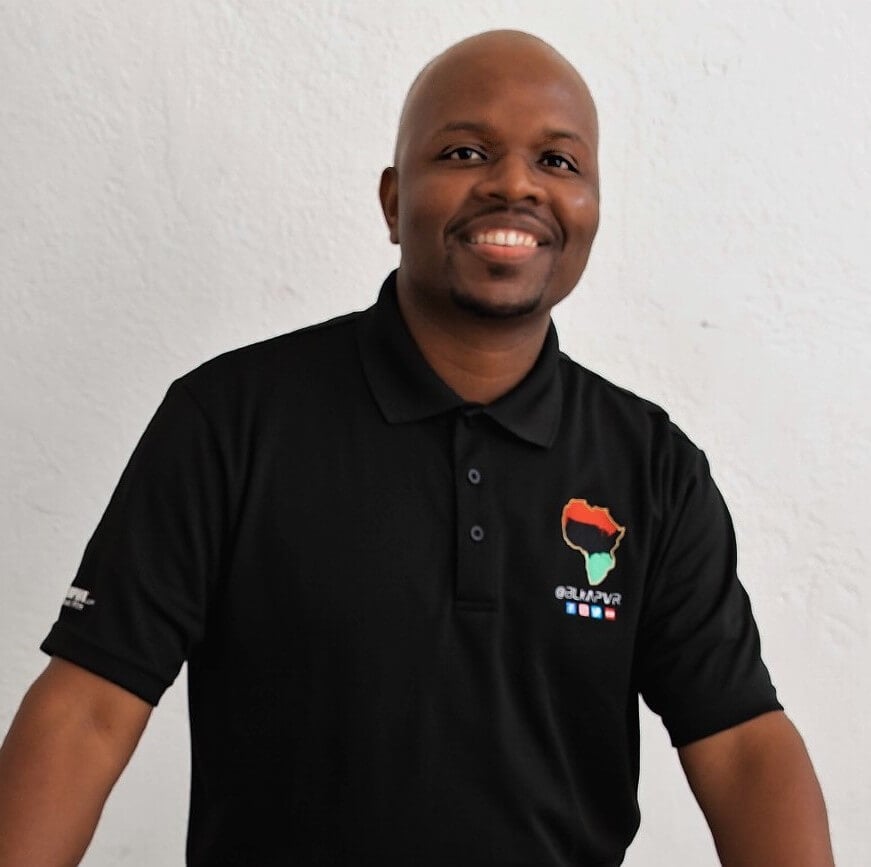
Grayson Walker: The fashion is all about spreading that change and inspiring others. The logo and branding I'm wearing are from my newest Inspire Change collection, which was released just a couple of months ago on our website, llgndary.com. It's about spreading awareness and creating a movement and a message that a lot of people can get behind, because inspiring change pertains to a lot of things in society today, not just hip hop culture. I think my generation in particular can see that there are many aspects of society where we want to see change. So that is what my brand is all about: inspiring change.
The Walker Family Legacy in Music
Taryell Simmons: I love that. So much to unpack in that one statement. But I'm going to start with the history, because at the time of recording this is Black History Month. You have a history of musicians in your family. What musical genres were your mom, dad, and granddad part of, and how did that come down to influence you in this new generation? Because we've got the history, and we've got the history in the making because of what you're doing.
Grayson Walker: To me, the story of the Walker family in music begins with my great-grandfather, my grandfather's father on my dad's side, whose parents were enslaved in Jamaica. He emigrated to the US, came to the New York area poor, with nothing. His was the total inspirational rags-to-riches story of a man one generation out of slavery who built himself and his family into the very beginning of a Black middle class at the time. He trained himself to be a doctor, became a family care doctor, and was basically the only Black doctor in the Washington, DC community at that time. He became a very prominent figure and achieved great wealth compared to what he came here with.
Grayson Walker: That set a standard in the family. More than a motivation, the correct term is expectation: an expectation of upholding a certain standard, representing your family in a certain way, and achieving certain things in your lifetime. That was the elder George Walker, and he held his family to a very tight standard. He was a very tough parent, but he raised two very successful children: my granddad, George Walker, and his sister, Frances Walker. My great-aunt Frances became a world-renowned pianist. She was the first Black pianist and the first Black woman pianist to accomplish many things, and she broke a lot of barriers in a classical arena that was traditionally very white.
Grayson Walker: My granddad was a very accomplished pianist first, and also a composer. He graduated high school and went to college at age 16, at a time when the majority of Black folks weren't able to go to college at all. He had a scholarship to Oberlin Conservatory, an extremely well-renowned music school, and became the first Black graduate of a number of programs there. He carved out his path as the first Black pianist and the first Black composer to do all these things, and his pinnacle achievement was becoming the first Black composer to win the Pulitzer Prize, in, I believe, 1996. My family's going to be on me if I get that date wrong. That was for one of the more than a hundred compositions he wrote over his lifetime. He's widely regarded as one of the most successful contemporary American composers.
Grayson Walker: He was very harsh on his children in upholding that precedent, so my dad was raised with an iron fist, and in his own right became a world-renowned violinist and composer. He's soloed with orchestras all around the world and built an incredible body of work. He's a full professor of music at the University of Colorado Denver. He's done experimental music with guitar and many compositions, and he wrote the first-ever rap symphony, for rapper and orchestra, called _Dream in the Hood_. He also starred in a documentary in India called _Song of the Untouchable_.
Grayson Walker: His mom was part of that influence as well. Her name was Helen Walker-Hill, a white woman from Canada whose life's work was to uncover and research the work of Black women composers. She was one of the pioneering trailblazers in giving a platform to Black women composers, who are marginalized on many levels and whose work was very difficult to find in the mainstream. My grandma was a very accomplished pianist and a professor in her own right, but I think what she would want her legacy to be most is all of the composers she brought to the forefront through that work.
Grayson Walker: Then there's my mom, a very accomplished pianist and violinist who has played in several orchestras. She accompanies my dad on his solo performances around the world, and she used to be a piano teacher. She actually played bass and keyboard in rock bands in LA in the eighties, so I was brought up with a lot of rock influences too. The combination of all of that has led to an unspoken expectation, whether internal or external, to achieve in the field of music and go places with this gift I've inherited, and also to a great diversity of influences and cultures that come into where I am with music now.
Grayson Walker: That brings me to the present and to hip hop. My granddad, bless his heart, would have had no interest in hip hop or popular music whatsoever. One of the reasons he was so successful was that he was incredibly detailed and particular. He wanted things to sound a certain way, and there were things he absolutely did not believe were real music. I have no doubt hip hop would be one of those things.
Taryell Simmons: I'm glad you said that, because that was going to be my next question. There's no way that Grandpa, with the Walker family tough as nails and his classical training, felt good about hip hop. But that's the evolution, right? First, let me say I am honored to have you share that Walker family history that a lot of us don't know. This is what I love about our podcast: we get snippets of Black history that's untold, that will probably never be in books, just by having a conversation. Kudos to your family for passing it down from generation to generation, because a lot of us are still searching for that.
A Rap Symphony With His Father
Taryell Simmons: I'm also curious: do you ever take components from what your mom and dad have done in composing and learning music? Does it ever seep into your music, into how you put compositions together or how you listen with a certain ear?
Grayson Walker: That's a good question, and one I get a lot, along with this one: I grew up playing violin, and I play drums as well, so people who knew me back then ask when I'm going to play violin or drums on my songs. To me, there's due time for all of those things. It's very important to me that the things that are most meaningful to me are done well, with the right quality, and at the right time. Incorporating a tribute to my granddad or to my parents is something I am absolutely going to do with my music, but I don't want to look back and wish I had waited. Any artist looking back six months or a year thinks, I've gotten so much better since then. There's a certain level I want to reach with my music, my career, and my platform before I incorporate those things in a way that lasts and is meaningful, and I haven't reached that platform yet.
Grayson Walker: With that being said, the first of many things I've worked on with my parents is the project I mentioned earlier, the first-ever rap symphony, which my dad, Gregory T.S. Walker, wrote over a decade ago. He was commissioned to write it for a Martin Luther King Day concert with the Boulder Symphony, the first-ever piece for an orchestra and a rapper. It was premiered, played with a couple of different orchestras, and then fell into obscurity. Two summers ago, with the help of the Boulder Symphony, he and I were tasked with reviving it. He was given the commission and told to find the rapper, and he thought, what if we did this? That's exactly what we did. It was delayed because of COVID, but I worked closely with him to adapt the lyrics to make them more relevant to the modern social context and to change some of the rhythms. There were things he said I was not changing, but it was a good back and forth.
Grayson Walker: It brought together two completely different styles of artistry: somebody who grew up with classical and experimental music and created this innovative new form, and somebody well-versed in hip hop who understands rhythm, lyrics, and the modern sound and cadence of hip hop today. I pride myself on my lyrics and my writing. Of course there were some clashes, but the end product is really cool. I performed it as a soloist with the Boulder Symphony in, I believe, summer 2021. It was on Independence Day, which was an interesting clash of ideologies, because it's a song written for Martin Luther King Day being performed on Independence Day. So I threw a line in there about Independence Day, but we still aren't free. Performing those lyrics in Boulder, Colorado, at a sold-out venue of about 90% white people was really interesting.
Taryell Simmons: Ooh, that's a bar! That's a bar.
Grayson Walker: It got a standing ovation. Then my dad and I got hired to perform at Smith College in Massachusetts, which was holding a centennial celebration of my granddad, who had once been a guest professor there. They wanted to include the family, so my dad performed a couple of pieces and I performed _Dream in the Hood_ again, with a really great reception. I've been really inspired by that whole journey, because there's absolutely an avenue to explore in bridging the hip hop generation and the classical music generation, which could not be farther apart on the musical spectrum in many ways. But it works. I performed it in front of 16-year-olds, 21-year-olds, 30-year-olds, and 90-year-olds, and they all appreciated it in different ways. So far, and I'm sure this will change, that has been the pinnacle of collaborating with my parents: creating something with a modern feel that is also exactly in their arena of performance.
Dream Covers and Genre Blending
Taryell Simmons: Thank you for sharing that. So many thoughts come to mind as people get ready for their Black History Month celebrations. All you schools out there, if you like what Mr. Walker is talking about, reach out to him so we can get these performances. This feels like a Netflix documentary the world needs to see. I'm curious: if you had to cover one album from start to finish, which album would you choose?
Grayson Walker: That's a tough question, mainly because I love music from so many different genres, and I have a particular set of talents that only extends so far. This is not going to be a Chris Brown cover for me; I don't have the facilities for that. But as far as music I appreciate, I would absolutely cover a Drake album or a Rush album. Rush is a Canadian prog rock band that was very successful in the 80s. Their top song was "Tom Sawyer," still a pretty popular song. They were an incredible trio of musicians who played about five different instruments between the three of them, and arguably the best drummer in the world, Neil Peart, rest his soul, was their drummer. He was one of my greatest inspirations in drumming growing up.
Grayson Walker: He was also one of the first reasons I got into writing songs and lyrics. Not only was he one of the best drummers of all time, he wrote the lyrics for Rush, deep and meaningful lyrics, even though he wasn't the singer. That made me think, I can write songs too. I could never sing like Geddy Lee, their singer, and I could never sing like Drake, but they're two very different forms of music that I really respect, and both have some great albums.
Taryell Simmons: Maybe you could do a mashup of some type and infuse both of them together.
Grayson Walker: That would definitely be cool. I try to experiment a lot with different genres. The last six or seven songs I've written for my most recent project have each been in a slightly different genre. The beats I'm writing to have a Playboi Carti type feel, a Billie Eilish type feel, an old-school Juicy J and A$AP Rocky type feel, a modern synth-pop The Weeknd type feel, and more of an Adele type feel. I appreciate so many genres, and it's fun to bring your own style into so many different things. I really respect artists who can do different genres well, because there's a difference between just doing a rock song and actually making it well. That's one of the reasons Drake is so successful and popular everywhere in the world: his style and sound transcend genre, and that's something I aspire to in my own music.
Authenticity, Record Labels, and the State of Hip Hop
Taryell Simmons: Love it. I want to go back to something you said earlier about making music that has a positive influence. I grew up in the late 80s and early 90s, and the 90s were my real jam. In the 90s we had an eclectic mix of hip hop: your De La Souls and your Brand Nubians, conscious rap that was very positive, and rap that consciously communicated what was going on in different communities because people were tired of living in certain circumstances. That's where art imitates life. I do want more positive rap, but at the same time I want the full expression of the artists, so we can be aware, informed, educated, motivated, and inspired toward movement and change. So, one, what do you think happened that we went into a stage of hip hop with less conscious rap and more party and trap rap? And two, how do we maintain that balance of artistry so we don't fall into groupthink and still tell the truth of people's reality?
Grayson Walker: First, I think there's an important clarification on my part, because part of what always comes across to people that's not quite accurate is the positivity element. When people hear that I want to change the themes of hip hop culture, they assume it's about positivity. I'm not Logic. I'm not peace, love and positivity. I respect that, and there should definitely be that in hip hop, but that's not my music. My music is about doing exactly what you're talking about: rapping about real things, things that are important, things going on in the community, the reflection of your own surroundings, even things that don't matter, like partying. It doesn't matter what you talk about. It's the way you talk about it.
Grayson Walker: There's a big difference between Tupac's "Changes" and 21 Savage. Tupac says, this is what's going on, this is what we're dealing with, this is reality. To me, that's as raw, authentic, and real as it gets, and that's what hip hop should be. To write the most authentic music, we have to write about what's real to us, who we are, and what we experience. The problem with hip hop today is that we've gotten away from that. Because some people experience gun violence and some people have to sell drugs to make a living, now everybody has to say they do that to be successful. It's not authentic, and that's the issue.
Grayson Walker: King Von is a good example. He was a good artist, a great storyteller and lyricist, and I liked his music. He's probably not somebody I would support as a public figure, judged on the things he had done in his life, but at least he rapped about what he actually did and went through. I don't think that was necessarily a positive influence, but I don't think he was lying in his songs, for better or for worse. Most people do lie, though. Most people rap about the exact same things and don't live that life. I don't live that life, and that's okay. You should rap about what you live and what's going on in your environment, and anybody can be successful doing that.
Grayson Walker: As for what changed, I think it has a lot to do with record labels and the white record executives who promote a certain type of music and a certain image of the Black community, which goes back to structural racism. Only certain things are being promoted in the mainstream. There are De La Souls and Tupacs in our generation writing about those things; they're just not being given a platform. The record labels are extremely high-powered and monopolistic. Think about who controls the songs on RapCaviar, the top Spotify playlist that something like 50 million people around the world listen to. Spotify editors choose them, and they're influenced by the record labels, who send them the songs and shape what's trending. The labels see what's popular and keep pushing it, and there's never any change.
Grayson Walker: So again, it's not about being positive. It's about accurately reflecting what's going on. There's a difference between saying, hypothetically, our community has a problem with gun violence, half the people I know were shot, I've been doing drugs since I was 16, these are the struggles in my community, this is my reality, and saying you have to kill people to get clout: I'm a killer, that's my brand, and that's what I push to the millions of kids who listen to me. You want to be cool, you want to be a rapper, you've got to be a killer, you've got to do drugs, you've got to sip lean.
Taryell Simmons: I definitely feel you on that. That's fire right there.