Introduction and Finding a Way Into Rise San Diego
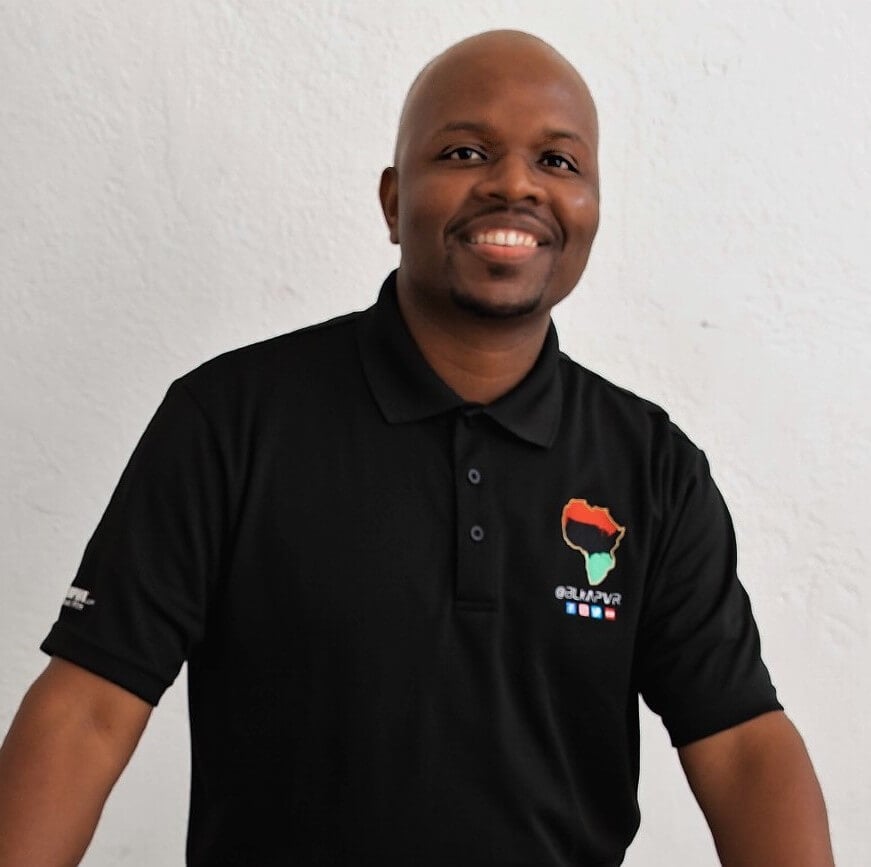
Taryell Simmons: Welcome, welcome everybody, to another episode of Rise Urban Nation. I've got my brother on the show today, and I mean that from the bottom of my heart. This is family. Eric Morrison-Smith. If you don't follow this brother on Twitter, go check him out. He gets me educated, entertained, enlightened and inspired all at the same time.
Eric Morrison-Smith: That's love right there. I appreciate it, bro.
Taryell Simmons: Before we get into it, a quick word from our partner, Tailor Brands, where you can design a logo, create a website and start your business all in one place. I used it to start my LLC and get through our rebrand this year. Now, me and Eric go back to Rise San Diego. How did you get in there?
Eric Morrison-Smith: After college, I knew I wanted to work in the nonprofit sector, but I had no connections. I'm from San Diego, but I went to school in Nebraska. So I found every San Diego nonprofit doing interesting work, found emails for their executive directors, and wrote them: "I just graduated from Nebraska with a degree in business management. I played football. Here are my skills, and I'd love to have coffee with you." I sent it to politicians too. Of about forty people, Dwayne Crenshaw responded. We met at Starbucks, and he said, "I'll pay you five hundred dollars a month to be my right-hand man." I said, "All right, bet." A couple of months later I was a program manager.
Taryell Simmons: For people who don't know, what is Rise San Diego?
Eric Morrison-Smith: It develops Black and brown leaders so they can engage their communities for change in San Diego. There were three pillars: community dialogues on the issues facing Black and brown communities, the leadership program, which is how I met you, and civic engagement like town halls. When San Diego Unified was changing some processes, we organized town halls so the community could share what it wanted.
Taryell Simmons: Even though you were the program manager, I felt like you were part of our cohort. Shout out to cohort three: Sean Elo, Andrew, Monica Montgomery. I ain't bragging, I'm just saying third time's a charm.
Eric Morrison-Smith: It's a solid class. I was basically a fellow, and I learned so much from all of you.
From Selling Candy to a Football Scholarship
Taryell Simmons: I like to highlight career journeys so somebody gets inspired. What was your job before Rise?
Eric Morrison-Smith: My first unofficial job was selling candy in middle school. My granddaddy is an entrepreneur, and my mom is just like him. She bought bulk boxes of Starburst and Skittles and said, "Sell these for a dollar. They cost about twenty-five cents, so that's a seventy-five percent profit." My first W-2 job was at a gas station and car wash at sixteen, working the register and cleaning toilets. It taught me discipline and showing up on time.
Taryell Simmons: What steps helped you get to where you are in your career?
Eric Morrison-Smith: I don't want it to sound like I pulled myself up by my bootstraps. I've had a lot of support. But it starts with football. Basketball was my first love, but going into my junior year my mama said, "You're not growing any taller, and we can't get you into college without a scholarship. You're playing football, or you're the water boy at every practice." After a week as the water boy, I played. I had a good junior year but no offers, so I researched every college and coach, emailed my highlights and made calls: "All I need is one opportunity." Sales pitches in high school. Two schools offered me a scholarship.
Eric Morrison-Smith: My career has been the same. The Workforce Partnership and PolicyLink jobs came from making connections and then bugging people. For PolicyLink, I went to a lobby day they hosted, made one connection, and sent my resume as soon as I got home.
Taryell Simmons: People say it's who you know. I say it's who knows you. My name has been mentioned in rooms my feet haven't touched yet.
Eric Morrison-Smith: Exactly. I've had about ten jobs and only got one, at Chili's when I was twenty, without a relationship. I have no shame about sending you two emails and then calling. It doesn't always work. People have told me no, and some who blew me off are now trying to offer me jobs years later. What helps is persevering through the denial and the awkwardness.
Adaptability and a Father's Incarceration
Taryell Simmons: What's one good lesson life has taught you?
Eric Morrison-Smith: Learning to be adaptive. Rise gave me the term, but I learned it from my mother. I've stopped saying resilient, because resilience is about taking punishment and moving forward. My mom's adaptability is street smarts and cleverness to adapt to her circumstances and keep going, as a single mother raising a Black boy in America with a partner who was incarcerated. When I had no scholarship or connections, I remembered how she navigated challenges. I use it in everything I do.
Taryell Simmons: My biological dad was in and out of jail, but we didn't have a relationship, so I never saw how the system stays a barrier even after you've done your time.
Eric Morrison-Smith: My father was incarcerated from when I was two until I was twenty-six. I'm twenty-eight now, so that's twenty-four years. Since he got out, the system won't let him come to San Diego to see my family. He lives in a transition home in Los Angeles. We've had one Thanksgiving and one Christmas together, and this last year he wasn't allowed to come. Every visit means a hotel for two or three nights and eating out every meal, at least five or six hundred dollars, and my mom goes every other week. It's a lot to navigate, and it informs my policy work on the criminal legal system.
Policy Work Shaped by Lived Experience
Taryell Simmons: Life blends with work. Tell me what you do at PolicyLink.
Eric Morrison-Smith: PolicyLink focuses on racial and economic justice. I'm on the Alliance for Boys and Men of Color team, a network of two hundred organizations across California transforming policies and systems that fail boys and men of color, their families and communities. We advance state policies created by and for the people directly impacted. We work on policing, on workforce development and getting resources to small community-based organizations, and on depowering the criminal legal system a bit. Rise taught me to center Black, brown and poor people. The Workforce Partnership showed me the limits of institutions and that the issues I care about come down to systems and policies.
Eric Morrison-Smith: Two examples. Last year we worked on AB 990, which would make visitation for incarcerated people a civil right. I testified, because for ten years I didn't see my father. He committed his crime in San Diego, but they moved him eight hours north, and the cost made the trip nearly impossible. Policies like this keep families connected and help people inside remember why they're trying to get out. This year, we're working on California's law that makes it mandatory in certain circumstances for schools to call the police on students. A gun on campus is one thing, but talking back in class should never bring the police. In sixth grade, a buddy accidentally ran his bike into a classmate, and the next day the principal called the police on us. The cop threatened us with handcuffs and jail.
Taryell Simmons: I remember Dads on Duty, where community dads took shifts at a school and incidents dropped to the single digits. Simple, community-led strategies work.
Eric Morrison-Smith: That's what we're about: community-based alternatives that understand our circumstances and are more effective. The teachers, students and dads all agreed it beat having police who don't understand the students. We need to fund and scale programs like that, not leave them to volunteers. That builds community power.
Creating Borrowed Knowledge
Taryell Simmons: I started this podcast when COVID halted my work in schools, because adults who look like us need a reconditioning of the mind too. I've joined several of your Borrowed Knowledge events. How did it start?
Eric Morrison-Smith: I love to read, but I was doing it in isolation. Right when COVID started, I read a piece by Du Bois on the history of Black cooperatives, posted it on Twitter and asked who wanted to read it with me. Three people responded, we met on Zoom, and everybody said how much they learned. At work I wasn't getting to develop my facilitation skills or be creative, so I decided to build something myself.
Eric Morrison-Smith: Then I read Barbara Ransby's biography of Ella Baker, whom many call the mother of the civil rights movement. She worked behind the scenes, building infrastructure and empowering local leadership instead of top-down structures. I fell in love with democratic organizing. So our ground rules are co-created every session, and after one opening question, the conversation goes wherever participants take it. People found it freeing, because they weren't there to hear one leader's analysis.
Eric Morrison-Smith: It has grown into three spaces: community learning circles on topics people request, where I tell folks they don't have to read anything because they already have the brilliance within them; book clubs, where we've read All About Love and The Will to Change by bell hooks and are now reading Becoming Abolitionists by Derecka Purnell; and a collective of six to ten people who check in on one another and work through what they're facing. People connected because of the isolation of COVID.
Eric Morrison-Smith: Early on there were awkward silences. I wanted to fill them, but that would have made me the leader everyone responds to. Allowing the silence made others fill the space with their own questions. It also made me more confident and creative at work. My organization even asked to bring Borrowed Knowledge in-house. I said no, because the community's ability to co-create it would be gone. But it was a good confidence booster.
Advice, the Future of Advocacy and Where to Find Eric
Taryell Simmons: What advice would you give someone who wants to start a space like this?
Eric Morrison-Smith: Borrowed Knowledge isn't new. It came from reading Ella Baker, Du Bois and the practices of SNCC. So study what's been done and adapt it, like I adapted it to a virtual space during COVID. Black people have built so much, even under the thumb of white supremacy. Second, get engaged with the organizations already doing solid work in your community. And last, be bold. You learn the most by doing the thing, not by waiting until you know everything. And read Du Bois across his whole career. He lived to be about a hundred, so you can't read what he wrote at twenty and think that's Du Bois.
Taryell Simmons: What does the future hold for policy and organizing in our communities?
Eric Morrison-Smith: I'm optimistic. Black people have fought for justice since we were brought here in chains, through rebellions, protests and our own institutions. In the past we relied on individuals to save us, and we've learned that won't get us to the promised land. Now people are collectively taking charge and directly creating policies, and doing the advocacy to pass and implement them. Our two hundred organizations each have bases of community members doing that. The future is democracy practiced from the bottom up, with institutions that support people rather than police, punish, criminalize and impoverish them.
Taryell Simmons: What are you working on, and where can people find you?
Eric Morrison-Smith: I joined three nonprofit boards last year and applied to grad school at UC Berkeley, so send some positive energy my way. For Borrowed Knowledge, people choose the topics, but I still do all the labor of organizing. I started paying folks at the end of last year to help, and I'll keep doing that. And find me on Twitter. My Instagram is mostly screenshots of my tweets. Twitter's the spot.
Taryell Simmons: Visit the website and get on the email list. This has been another episode of Rise Urban Nation. Subscribe, leave a comment, and spread the love. This has been Taryell Simmons and Eric Morrison-Smith signing off and saying: be bold.