Introduction and How Taryell and Cheddy Met
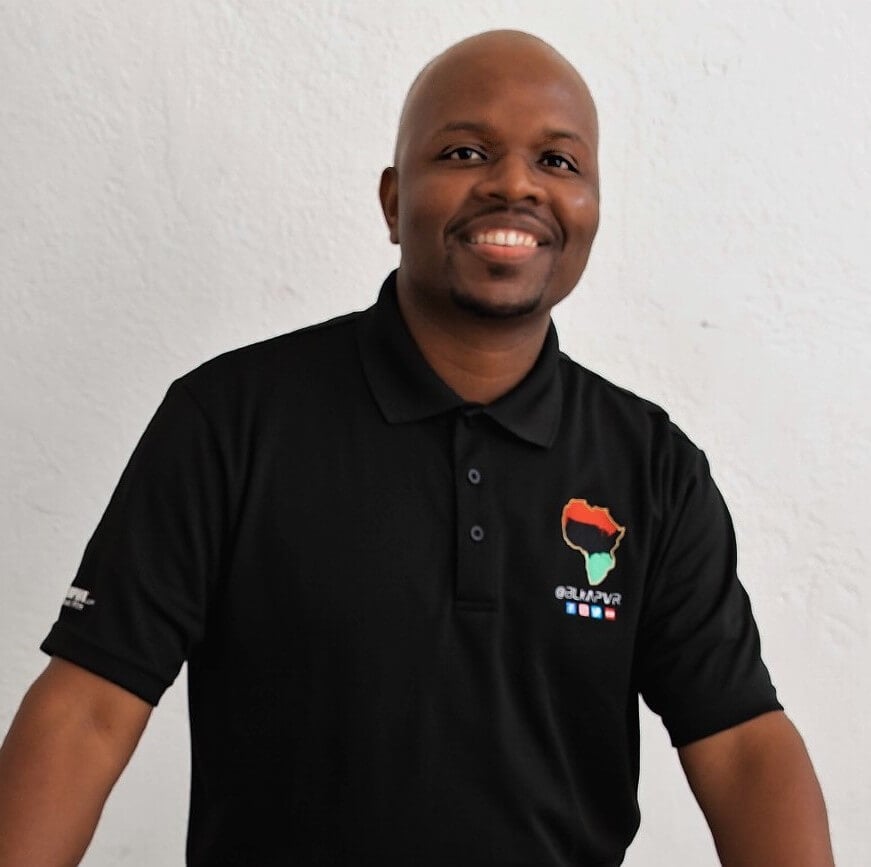
Taryell Simmons: Welcome, welcome, welcome, ladies and gentlemen, to another episode of Rise Urban Nation. It's your host, Taryell Simmons, and I've got a special guest in the building. If you don't know this brother, you need to get to know him. Cheddy Matthews, what is going on, good sir?
Cheddy Matthews: I am doing well. It is so good to be on your platform. I'm honored to be with you.
Taryell Simmons: We have to tell them the backstory. Our brother Brett brought us together on a panel at a summit, and when Cheddy started speaking, it was feeding my soul. It was like he caught the pass, threw me a lateral, I tossed it back, and we scored a touchdown. I knew we were in sync the first time we met.
Cheddy Matthews: That is the perfect analogy. I said that the things you were saying were audible gold. It was gem after gem, nugget after nugget, a verbal treasure trove. I kept thinking, did people hear what he just said? That right there could be the whole summit.
Growing Up Jeminglish
Taryell Simmons: What fascinated me in your story is how you navigated the world from different cultural perspectives. I grew up in a Nigerian household, and outside the house people saw me as Black American, as Nigerian, or as a kid from the hood. People want to box you in. What cultures live inside you, and how did navigating them shape who you are?
Cheddy Matthews: I call myself Jeminglish, a combination of Jamaican and English. I was born in London to Jamaican parents and then moved to New York. I was raised in England but grew up in New York, so I have British manners and politeness, my teenage years are very New York, and all of it is layered with a heavy dose of Jamaican: food, culture, language, music and history. Being all of those things means I am all of them, yet none of them. In Jamaica, I'm a foreigner. In England, they call me a Yankee. In America, I'm a Brit. When I went to college in North Carolina, some friends told me I wasn't Black, I was English. Apparently you can't be both.
Cheddy Matthews: In so many areas of my life I didn't fit, so at some point I stopped trying to fit. You want a mold for me? Good luck. I'm just me. In most countries, when you say you're Jamaican, people say, "Bob Marley," and they just let you go. We're a lot more than Bob Marley, but I'll take it. I enjoy the richness of those cultures.
Finding the Similarities Between People
Taryell Simmons: Every time I learn about a new culture, I get curious and take something from it into my own life. If you take the time to get curious, you find something in other cultures that feels like home, something you can use to connect with people.
Cheddy Matthews: I live by that. I look for the similarities now, because they exist. We focus so much on our differences, but once you talk to people on a human level, we have a lot in common. You may boil it while I fry it, you may bake it or roast it, but we do a lot of things the same. It hit me most when I went to Russia. I went there thinking these people would be anti-us and hateful, the way I went to Mississippi for the first time from New York ready for a fight, and found Southern hospitality instead. In Russia, once we started talking, those guys had families like I did and just wanted to take care of their babies. The country I thought was our arch enemy had a guy doing the exact same thing I was doing, just in a different uniform. I've felt the same in the Middle East. We are part of one human family, and there is strength in diversity.
From Marine Communications to Coaching
Taryell Simmons: I realized I don't think I even know what you do for a living. What industry are you in?
Cheddy Matthews: It has pivoted. I was a U.S. Marine for 20 years, a communication and information technologies guy. Satellites, radios, telephones, communication systems: if you needed to talk from A to B, I was the guy. When I retired, I knew there was nowhere in the civilian world I could do what I did for those 20 years, so I moved on, and now I'm a coach. I help businesses that are stuck and struggling to get beyond that point and keep growing. Deeper than that, I focus on people who have gone through a significant negative event that derailed their trajectory and knocked them off their glide path to success. We get stuck in that trauma cycle: shame, guilt, frustration, fear, loss of confidence. You're the COO, the founder, the parent everyone goes to, and you have no one to talk to. How do we get you back on track to soar beyond where you were before?
Cheddy Matthews: My whole reason for being on this earth is to leave it better than I found it. I do that through speaking, coaching and podcasting. One of my skills is seeing other people's superpowers. Like a dog can sniff out certain things, I can sniff out people's awesome, and I help them see it and monetize it. I could watch every video you've ever made, Taryell, and I'd be a rubbish copy of you. So why don't I just be my authentic, best self?
Superpowers, Strengths and Voltron
Cheddy Matthews: In life we try to be other people, so we don't walk in our space of genius or our flow. Think about Voltron, the best cartoon on the planet: five lions with different powers come together to form a huge robot that defends the universe. When everyone is operating in their superpower space, you get synergy, growth and genius, and luck seems to just happen. I'm blown away by things I can't do, so I hone in on people's strengths and help them live there. I do it with my own children too. I believe in their superpowers.
Taryell Simmons: I was informally coaching someone who had been told to focus on their weaknesses. I told them to double down on their strengths. Get so good at those three things that companies seek you out and build a team around you for the rest. Don't put all your energy into your weaknesses.
Cheddy Matthews: That was audible gold. Even if you improve your weaknesses, they're still your weaknesses, and you might be average at best. Focus on your strengths and become excellent, so when it comes to one thing, people know they need to go to you. Do what you love and outsource the rest. If you come up with the ideas, figure out the what and let somebody else figure out the how. As a leader, ask whether you're putting people in the right places. Too often we try to put a square peg in a round hole. Find your lane.
Taryell Simmons: With the Great Resignation, a lot of people want to do that but don't know the next steps. What would you tell them?
Cheddy Matthews: Know who you are. Take free assessments: Myers-Briggs, StrengthsFinder, the Enneagram. They help you see how your mind works and why people energize you or drain you. Then ask: What am I good at? What do I like? Look for where those circles intersect. If you love puzzles and math, maybe there's a STEM career for you. Notice when something makes you feel light and excited versus heavy and drained. If you don't know what you like, start with what you don't like and look at the opposite. Get in the habit of thinking about how you feel, then find a way to monetize it. Loving sports doesn't mean you have to be an athlete: you could be in ticket sales, an agent, a writer, a trainer or a coach. I tell my kids that the person who makes wire hangers, toothpicks or zippers is probably a millionaire. You don't have to do the conventional thing.
A Trifecta of Pain and Finding Purpose
Taryell Simmons: A lot of military people get stuck in life after the military. What steps did you take to get from A to B?
Cheddy Matthews: It was a bumpy road. As an IT guy I could have made bank anywhere, but I wanted to be an everyday regular person. I retired in Tampa, moved to Orlando and became a life insurance agent with New York Life, because I'd seen people perish without it and military people need it. So much for anonymity: I networked with so many people that I knew everybody. Then my sister got ill in England. I went back to take care of her and said I wasn't coming back until she got better. She didn't get better, and it rocked my world. I'd seen death many times occupationally, and I still wasn't ready.
Cheddy Matthews: It was a trifecta of pain. I was going through a divorce at the end of my career, losing my family identity. I was losing my identity as a Marine and a warfighter by retiring. And then I lost my sister. I could have handled any one of those; all three cut me to the core. I was emotionally, physically and spiritually spent, a shell of a human being, and I felt I had failed my sister. Then I realized there are people suffering just like me, so I got certified as a coach and speaker to help them. For years, because of the guilt and pain, I avoided working with those people, because it meant facing my own demons. Then my co-host Michelle, a life coach, asked me a question that made me hit my traumas head on. I realized my podcast has to focus on people suffering in silence: people who have achieved a certain level and think they have no one to talk to, whether it's a divorce, health challenges, losing a child or a financial downturn. It's a journey, not a destination, and I'm not about gimmicks. You can be the author of your own hero story. Something happened; now what? Let's change your narrative so the story ends with you winning.
Lessons on Failure and Starting Your Message
Taryell Simmons: What's one good lesson life has taught you?
Cheddy Matthews: Bet on yourself. Within that: take your shot and do the ask. If you want something, ask for it, because if you don't put it out there, you're a secret agent and nobody can help you. Don't be afraid of failure. Failure is only failure if you stay there and quit. Fail fast and fail often. How did you learn to walk? Not from a PowerPoint. Left foot, fell; right foot, fell; until you were running and jumping. With every mistake there's a lesson, and if you don't learn it, life will make you take that test again. And be comfortable being uncomfortable. There is no growth in the comfort zone. You could be one question or one action away from your breakthrough.
Taryell Simmons: This is the liquid gold episode. What advice would you give someone who has gone through something and wants to start speaking, coaching or a podcast to help others?
Cheddy Matthews: When your inner critic tells you that you can't, remember that your life has crafted a message only you have. Your tribe needs to hear your message, cooked your way. There are people who won't resonate with me or Taryell; they need you. It is your moral obligation to serve the people you are destined to help. It won't be perfect. Scroll back to anyone's first ten or twenty YouTube videos and see how rough they were. They were still helping people. You have to start.
Taryell Simmons: Since COVID, more people are thinking about self-care and being more conscious. What does the future hold for your industry?
Cheddy Matthews: The industry is massive, and not all coaches are created equal. Many people who call themselves coaches are mentors. Regardless of the title, if someone gives you the help you need and you're growing, that's the right person. If they're not a fit, it's all right to walk on. Being challenged is not the same as being misaligned. A coach who tells you things that are tight but right and makes you uncomfortable is different from someone who diminishes your fire.
First Time Story Slam and Final Words
Taryell Simmons: What projects are you working on, and where can people find you?
Cheddy Matthews: I'm running a First Time Story Slam in San Diego. We get to know people through their stories. This month's theme was food firsts, like the first time you ate in America or how someone learned to cook and then started a restaurant. Next month it's sports. Focusing on first times creates new neural pathways, and people leave with more friends and connections than they came in with. I'm still coaching, and I co-host the Winning Inside podcast with Michelle, on Amazon, Spotify, Apple, Stitcher and every platform where you listen to podcasts.
Taryell Simmons: Make sure you check out Winning Inside for more liquid gold. Any last words of wisdom?
Cheddy Matthews: Before you leave the house today, look in the mirror and tell yourself you are absolutely amazing, and believe it. There's enough negativity around you. Bet on yourself and put some money on you. Stay amazing, because you are. And if you don't know that you're amazing, go find out what makes you so amazing.
Taryell Simmons: If that's not a way to win inside, I don't know what is. Cheddy, thank you again. I'll put everything in the show notes so you can check out Winning Inside. Ladies and gentlemen, have a good one.