Introduction and Welcome
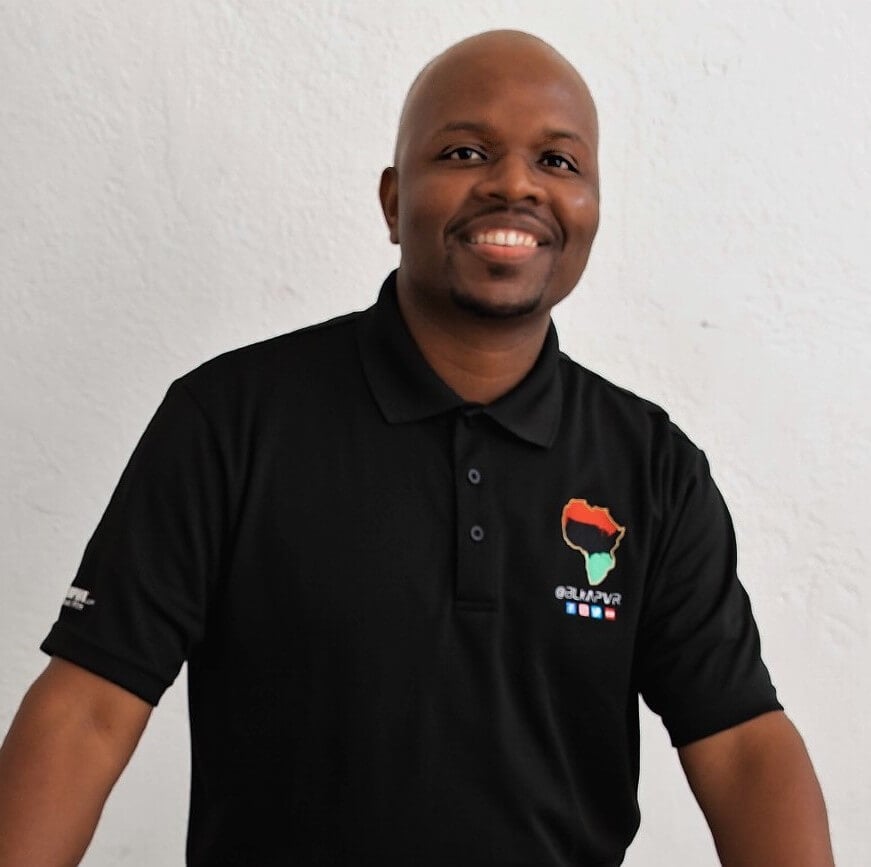
Taryell Simmons: Welcome ladies and gentlemen to another episode of Rise Urban Nation. I have a special guest today. We have been in several of the same circles, and I am surprised we haven't met each other sooner. Bassanio, who are some of the people in those circles? Luis from We The Plug, who else?
Bassanio Peters: Luis from We The Plug, Mike Roberts from San Diego Code School, Claude Jones from San Diego Tech Hub, you name them.
Taryell Simmons: I am glad that I met you on Innovation Day. We will get into what you were doing there, your booth, and everything else. But for those who don't know Bassanio, let's start with that question: Who is Bassanio?
Bassanio Peters: Bassanio is the founder of a startup called Assist to Develop. I am a father with two young kids, eleven and ten. I am also a former collegiate athlete turned entrepreneur.
Taryell Simmons: I didn't even know you were a collegiate athlete. What sport did you play? Basketball, okay. There is life after sports, ladies and gentlemen; you just have to be ready to embrace it. Were you chasing the basketball dream, or was tech always on your mind?
Bassanio Peters: Tech wasn't always on my mind, but entrepreneurship was. I didn't know it was going to be in tech. To be honest, I started in real estate. When the economy burst, I was trying to flip houses and learn the game. I was starting my own firm around that. But then I got introduced to tech and fell in love with it. I have been in mechanical engineering for over fifteen years now and fell in love with the process of how products come to life. That came from my best friend since eighth grade, who is a mechanical engineer designing roller coasters for Universal Studios. We always had dialogue back and forth, and I just fell into it and fell in love with it.
Taryell Simmons: What were you interested in when you were in high school?
Bassanio Peters: Basketball. My best friend always wanted to design roller coasters, but I wanted to play professional basketball overseas so I could travel and see the world. That was my goal. But it didn't work out that way. I left college after my junior year because of a slew of injuries, and it wasn't fun for me anymore. I wondered what the next step was for me, entered the corporate world, climbed the corporate ladder, and jumped headfirst into entrepreneurship.
Transitioning from Athletics to Engineering
Taryell Simmons: A lot of people have trouble making that transition. How were you able to make it? Some people have that dream, it doesn't pan out, and they have a tough time transitioning into the next thing. What was that process like for you?
Bassanio Peters: Good question. I know a lot of people who struggle with that. I have friends who played professionally, came back, and didn't know what to do. For me, it has always been the drive to be the best and thrive in whatever field I am in. Long story short, I got lucky. I came home from college not knowing what I wanted to do and entered a management program for Best Buy. I was selling home theater packages through Magnolia Home Theater at Best Buy. I sold a customer a complete package, and he loved my style. He invited me to his brokerage office where he did home loans. That was my first taste of that industry. Once the economy tanked, I asked myself what I was interested in doing next. A friend got me a job selling mechanical engineering design software. I planned to do it as a stopgap while getting my brokerage license, but lo and behold, I fell in love with the industry. I found something where I would go to conferences and be one of the youngest people and one of the few minorities. I stuck out, so I had to show up and show out. That competitive drive made me want to be the best. I am a student of the game, learning and immersing myself into it.
Taryell Simmons: You gave so much value in that story. You were open and willing to experience new things, and you had the mindset to want to be the best, putting energy, focus, intention, and tenacity into it.
Bassanio Peters: Trying new things and not being afraid of it was key. It was luck that I fell into it, but from there, it was about figuring out how to thrive. I had a good support network with my best friend. Ultimately, it was a matter of not being afraid to fail and not being afraid to try things.
The Founding of Assist to Develop
Taryell Simmons: Tell the people about your company, what you do, and how it got started.
Bassanio Peters: I run a company called Assist to Develop, and we are working to democratize innovation in engineering and manufacturing to help anyone anywhere create anything. Organizations struggle to innovate. In 2019, 581 billion dollars was spent on corporate innovation, yet only 6 percent of executives were satisfied with the results. There is a massive gap. Rewinding to when I was selling software, I saw an opportunity. I wasn't a mechanical engineer—I studied business in college—so I learned by becoming friends with engineers and staying curious. Many of those engineers asked if any of the companies I sold software to had freelance work they could do on nights and weekends. I started feeding them business. One specialist who did computational fluid dynamics—studying airflow and fluid dynamics through pipes and tubes—was billing 250 dollars an hour. He gave me a 50 percent cut because I handled the sales, operations, and customer relations while he focused entirely on engineering. I realized I could scale this, so I launched a freelance marketplace for mechanical engineering and CAD design, similar to Fiverr or Upwork. However, people began coming onto the platform offering to build advanced aerospace rockets for 9 dollars an hour. That model compromised our brand and vision. As an entrepreneur, you have to iterate and recognize when something isn't working.
The Pivot to Open Innovation and NASA
Taryell Simmons: Exactly.
Bassanio Peters: I started researching open innovation. I learned about an open innovation challenge run by a food company trying to remove excess grease from potato chips. They opened the challenge globally, and the winner was a violinist who used her deep expertise in vibration to solve the problem. That opened my eyes. Our vision at Assist to Develop is to democratize innovation and help anyone anywhere create anything. It doesn't matter your pedigree, who you are, or where you come from; if you have the best idea to solve a problem, you have the best idea. Both of my parents are from South Central Los Angeles—my mom from Carson and my dad from Watts. If someone from those communities can solve these challenges, there is prize money and a pathway to propel their career. Working from my garage, I pivoted away from the freelance marketplace. I targeted the top innovators in the world: NASA. I cold-called and cold-emailed a contact at NASA for months until he agreed to run a pilot challenge with us. We delivered a 90 percent time and cost savings improvement, and we have been building momentum ever since.
Taryell Simmons: That reminds me of an innovation platform operating somewhat like a blockchain network.
Bassanio Peters: That is our next iteration. Many people moonlight or invest sweat equity into startups because they don't have accredited investor capital. Imagine a startup running a challenge where winners receive tokens representing equity ownership in the company. It functions like Kickstarter, but before the product is built. We are exploring how to tokenize this experience and create shared ownership.
Corporate Innovation Barriers and the HiPPO Effect
Taryell Simmons: Going to the root of the problem, why do you feel organizations struggle with innovation?
Bassanio Peters: There are a couple of reasons. According to a Deloitte report, 84 percent of executives struggle to find top tech talent amidst an ongoing hiring war. Another major reason is the HiPPO phenomenon—the Highest Paid Person's Opinion in the room deciding what idea is best. Furthermore, established companies like Toyota focus on reliable revenue drivers like the Camry rather than pursuing radical disruptions. Corporate politics and internal silos also play a role; some corporations have over 300 divisions that rarely communicate. Employees are often so laser-focused on daily tasks that they cannot express creative solutions. In contrast, companies like Google succeed because they allow employees 10 to 15 percent of their time to experiment, which generated products like Gmail. That room for experimentation is often lacking.
Taryell Simmons: It is a catch-22. You have to maintain your core revenue, but you also must have your pulse on innovation. Blockbuster failed to adapt when Redbox emerged, and Redbox failed to adapt to streaming while Netflix took over. If you don't evolve, you get left behind.
Bassanio Peters: That is our exact message to organizations: disrupt yourself or risk being disrupted. In our NASA pilot, participants included a university team from Madrid, a student from MIT, and an engineering consultant from France. People from different disciplines around the world brought unique perspectives to the table. Beyond solving problems, companies struggling to hire talent can use open challenges to evaluate candidates based on demonstrated capability rather than just a resume. In mechanical engineering, many graduates design 3D CAD models that cannot physically be manufactured. Challenges demonstrate what candidates can practically build, which is critical given current global supply chain pressures.
Democratization, Diversity, and Social Impact
Taryell Simmons: This also ties directly into diversity, equity, and inclusion. Including diversity of thought elevates products and expands services.
Bassanio Peters: In my very first venture capital pitch, an investor told me to ignore democratization and focus solely on the freelance marketplace. My original vision was bringing together someone in Rwanda who deeply understands a local community problem, someone with technical expertise, and someone with financial capital. Early on, I chased the immediate revenue of freelance contracts because investors advised it. It took market maturity for open innovation to gain traction. When I started in 2014, conversations about open innovation were rare, much like early resistance to cloud computing. As a young minority in corporate spaces who experienced being overlooked, I knew non-traditional models could showcase genuine capability.
Taryell Simmons: You are one of the pioneers, and I hope you receive your flowers.
Bassanio Peters: I am not in it for the flowers. I want people to have opportunities to do what they love. As economic pressures arise, new economic models are necessary to foster upward mobility. For example, we are exploring a design challenge with Nike for hands-free snowboard boots. Participating allows individuals without formal backgrounds to showcase their talent, open doors, and drive diversity and inclusion for major brands.
Taryell Simmons: This could transform career development and recruitment across industries.
Bassanio Peters: Aspiring entrepreneurs must find a mission that gets them up every single day to fight an uphill battle. The freelance marketplace made good money, but it didn't inspire me to battle through tough days. This long-term vision can change lives. For instance, I ran a two-week hands-on manufacturing training course in Los Angeles through the LACI clean tech incubator for South Central residents with no prior background. At the end, students completed challenge projects, resulting in 15 of 35 students landing internships. One undocumented student secured an internship and became a full-time mechanical engineer at LADWP within weeks. That outcome validated our mission at scale.
Struggle as a Superpower and Building Resilience
Taryell Simmons: What was your first job?
Bassanio Peters: Scooping ice cream at Rite Aid. Thrifty ice cream is still the best. While going to school and playing basketball, I scooped ice cream and handled store returns. It was humble beginnings.
Taryell Simmons: From scooping ice cream to advising tech companies on innovation. What advice would you give to someone looking to break into the innovation space?
Bassanio Peters: Surround yourself with the right people and seek mentors who are willing to help. Believe that you belong in the room, apply the knowledge you receive, and don't be afraid to take non-traditional routes. Learn operational excellence through corporate roles, as I did on executive teams. Regarding future jobs, while automation may displace a million roles, millions more will be created. Upskill yourself and participate in challenges on our platform and others to build tangible experience. Employers ask for years of experience for entry-level roles; challenges give you practical experience. My relationship with Steve Rader at NASA started with a cold LinkedIn message at two in the morning simply asking to learn. He became one of my biggest cheerleaders, leading to contract opportunities.
Taryell Simmons: What is one major lesson life has taught you?
Bassanio Peters: Struggle becomes a superpower. Hard times build resilience and teach you how to persevere. People who are handed everything often fold under pressure, whereas those who endure hardships know how to rise. While building this open innovation platform, I was laid off from my job and drove for Amazon Flex and Lyft to support my two kids while pitching and working between rides. When NASA offered our first pilot, our platform wasn't ready for the Friday demo. Fortunately, the demo was postponed to Wednesday morning. I finished testing that morning, delivered the demo, and secured our contract. We built the parachute on the way down because we had to succeed.
The Future of Work, Web3, and Final Advice
Taryell Simmons: Taking the leap allows things to fall into place. What does the future look like if we continue down this path of open innovation?
Bassanio Peters: With Web3 and crypto, this will level the playing field globally. Companies like Google, Apple, and Tesla are increasingly waiving degree requirements in favor of demonstrated skill. By building libraries of stock challenges, individuals can prove their skills, and small companies can put up prize money to access the same world-class talent pool as tech giants.
Taryell Simmons: What do you say to dominant tech giants that buy out potential competitors to monopolize innovation in-house?
Bassanio Peters: Often when large companies acquire competitors solely to eliminate threats, product innovation stalls. Monopolizing through buyouts will become unsustainable as diverse, decentralized teams proliferate. Decentralized autonomous organizations (DAOs) and community-driven startups that share equity will outperform legacy acquisitions. Furthermore, user data monetization platforms—such as Streamlytics founded by Angela Benton—allow individuals to control and monetize their personal data. Collaborative models will dominate over the next three to five years.
Taryell Simmons: Collaboration is key to serving the marketplace effectively. What projects are you currently working on, and where can listeners connect with you?
Bassanio Peters: You can visit our open innovation platform at a2d.app. You can find me on Twitter at @IAmBassanio03 and on LinkedIn under Bassanio Peters III. I also have a partnership with Prismir, a manufacturing company helping businesses source parts amid global supply chain challenges.
Taryell Simmons: Any final words of wisdom for innovators and creators?
Bassanio Peters: Take action. Adopt a samurai mindset: when you know the right thing to do, strike. Take the opportunity and execute.
Taryell Simmons: Take action and strike. Thank you, Bassanio, for joining us, and thank you to all our listeners. We will catch you next time on Rise Urban Nation.
Bassanio Peters: Thank you, it was a pleasure.